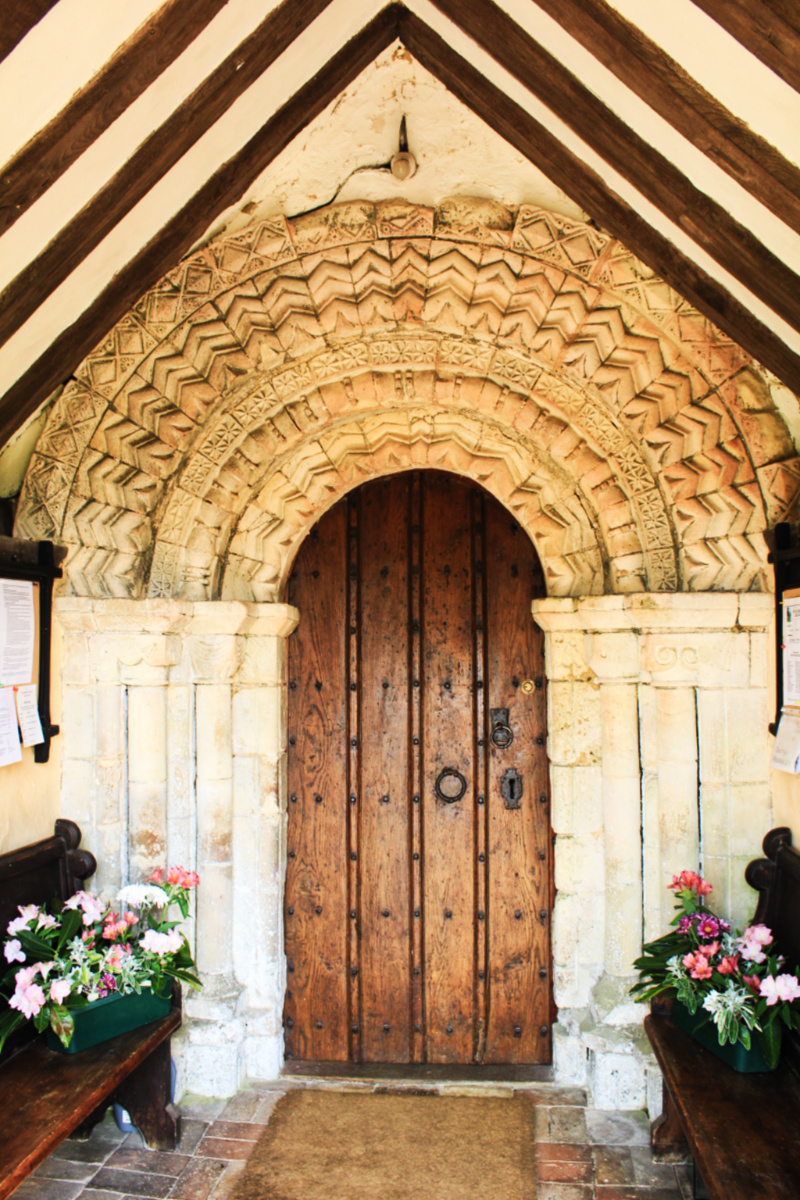
Ring around … with Roses

hamelin by falco

design by CP on original photo by falco

Ringed around with roses
With tissues wiping noses
Plague has brought the sneezes
Bubonic, black, with wheezes

Eastern rats we hold to blame
Held in ships awash with shame
Fleas that carried, heat restricted
Came with cold, released, inflicted
Swelling bubos in axial joins
Painful armpits, painful groins
Sweating, coughing, life depleting
Into town and country eating
Numbers rising, mass graves seen
They didn’t know of quarantine


Sammi’s Weekend Writing Prompt #61: Quarantine in 67 words.

Posted in Poems (Some Silly) | Tagged , | 16 Comments

Coke and Honey

Long years ago, when I was at school, as part of our history curriculum we covered the British Agricultural Revolution. Living in Norfolk the focus, of course, was on the change from the open three-field system (which required one field to be fallow each year) to the revolutionary “Norfolk four-course system” (see below).

Bee and Nectar Mix

The “Bee and Nectar Mix” at High Ash Farm, Caister St Edmunds: Photo 21 June 2018

Coke of Norfolk

Coke of Norfolk (aka Coke of Holkham, aka Thomas Coke, 1st Earl of Leicester 1754-1842), was cited as the originator of this revolutionary agricultural system, able to provide food for the growing masses.

1st Earl Of Leicester

Coke of Holkham: downloaded from Wikipedia, and remastered by CP

In later years I discovered this wasn’t true. Though, true, he did much to improve his 30,000-acre estate at Holkham, in North Norfolk. To quote from Wikipedia

Coke has been described as “the real hero of Norfolk agriculture”, despite the fact that his land was so poor one critic is said to have remarked that “the thin sandy soil must be ploughed by rabbits yoked to a pocket knife”.

While Coke did much to promote the new system to his fellow politicians and landed classes, his interest was primarily stockbreeding.

A lamb at Venta Icenorum

A black-faced lamb, probably not of Coke’s breeding, but rather cute grazing at Venta Icenorum (Roman town at Caister St Edmunds): Photo 21t June 2018

The four-year crop cycle:

  • Year 1, wheat
  • Year 2, turnips
  • Year 3, barley with clover and ryegrass under-sown
  • Year 4, clover and grass grazed or cut for fodder

Developed in Norfolk (England) during the 17th century. I would argue an even earlier date.

Turnip Townshend

Today, the introduction of this revolutionary system of agriculture, crucial in its ability to feed the growing populations in the growing towns and cities, has been shunted onto the shoulders of Turnip Townshend, scion of the Norfolk Townshends of Raynham (aka Charles Townshend, 2nd Viscount Townshend 1674-1738; eldest son of Sir Horatio Townshend, 3rd Baronet & Viscount; and brother-in-law to prime minister Robert Walpole).

Turnip Townshend

Turnip Townshend: from Wikipedia

Charles Townshend was keen on turnips; he saw them as excellent fodder for his livestock.

But while the inclusion of turnips might represent an innovation, it wasn’t the turnips alone that allowed the fallow-field to fall out of use. Let me explain.

All Fodder to Me (or Organic Farming, aka Soil Fertility)

The use of turnips as winter fodder for the livestock had a double effect. With turnips as fodder more stock could be overwintered, which in turned produced more manure. Good for field fertility. Side effect of this was the “night-soil” man no longer called with his cart to collect the human “deposits” from towns and cities. (which might have had some bearing on the subsequent outbreaks of cholera).

But it was the inclusion of clover and rye-grass in the rotation that was the real innovation, and delivered a double whammy for soil fertility.

Hay field, overlooking Tas Valley

Recently cut hay field, overlooking Tas Valley, and Venta Icenorum: Photo 21 June 2018

Firstly, in grazing the fields the sheep provided fertiliser in situ.

Secondly, the clover, being a legume, converted the nitrogen found as a gas in the soil to a form those under-sown grasses could use. In addition, it further fertilised the soil ready for a bumper crop of cereals in the next year.

This was organic farming at its best.

vetch

Vetch growing in the “Bee and Nectar” MIx at High Ash Farm: Photo 21 June 2018

And who was responsible for the introduction of the clover and rye-grass?

Mostly the smaller tenant-farmers.

Calvinists and their Honeyed Gifts

And mostly in Townshend’s and Coke’s North Norfolk neighbourhood, those tenant farmers would have been recent immigrants from the Netherlands, fleeing religious persecution (aka Calvinists). They began to arrive in mid-1500s and continued in trickles and swarms during the next two centuries. Not only did they bring new strains of clover, they also introduced many of our now traditional market garden vegetables.

Which brings me to the honey …

A Pollen and Nectar Mix

These photos were taken on the walks around High Ash Farm (Caister St Edmunds, a few miles south of Norwich) where broad grassy walks invite the rambler in, and over 100 acres are devoted to the provision of a “Pollen and Nectar Mix” to attract endangered bees, moths and butterflies.

Sainfoin

Sainfoin growing at High Ash Farm: Photo 21 June 2018

In just a small patch of field I was able to count at least six different species of legume (trefoils, medicks, clovers, vetches and sainfoin) not to mention bedstraw and oxeye daisies. I expected the farm to have an apiary. Maybe it has, but it advertises itself as horse stables.

Bee and Nectar Mix

“Bee and Nectar Mix” field at High Ash Farm: Photo 21 June 2018

Now I look at this vista, and imagine how our countryside looked in the days before chemical fertilisation.

Posted in History, Photos | Tagged , , , , , , | 35 Comments

Mallow … best served fresh

For my fellow writers at Camp NaNoWriMo (April) . . .

Common Mallow

The Common Mallow, one of my all-time favourite wildflowers: Photo 21 June 2018.

The Common Mallow, one of my all-time favourite wildflowers: I haven’t tried it toasted. Though this isn’t the ‘Marsh’ mallow, which is now quite a rare plant.

Mallow close up

Common Mallow close up: Photo 21 June 2018

Taken on a windy day, I think those white dots that spray out from its stamens could be a dusting of pollen, captured in action.

Posted in Photos | Tagged , , | 2 Comments

In Post

Every autumn the sycamore keys spin down from the trees, each to cast their unique divination. I’m keen to see what becomes of this post-rooted seedling.

Sycamore in post

Sycamore seedling in post: photo 30th May 2018

Will it devour its host in years to come? Or will it fail to flourish due to an unforeseen lack of essential nutrients?

#2018picoftheweek: Something Grows

Posted in Photos | Tagged , , , , , | 19 Comments

Broken

A poem reposted from 2015

broken glass by gere

image by “gere”

A broken house and a broken life
Of a broken man with a long-lost wife

The springs of bed and sofa’ve sprung
The stair-rods all are fitted wrong
Around the table chairs are chipt
The carpets all are rucked and slipt

The garden’s unkempt
The fences bent
The windows are grubby
(The cat is tubby)
In the bathroom:
The toilet seat’s loose and moves about
The tiles are skewed for want of grout
In the kitchen:
A lone hob-ring works
In the larder:
Fungi and black-mould lurks

But what’s in the old man’s broken heart
Are memories too dear to ever depart.

Posted in Poems (Some Silly) | Tagged , | 9 Comments

Lacy Umbrellas

The many wildflowers of the umbellifer family that grace our English countryside are seldom easy to tell apart (except for hemlock and hogweed). Here … I think it’s Cow Parsley though it could be an early flowering Hedge Parsley. The lack of bracts suggests the former while the lack of red stems suggests the latter. Ho-hum.

Hedge or Cow Parsley

Cow Parsley (probably): Photo 7th June 2018

The delicate lace-like flowers are easily tossed in the wind, so I reckon it a triumph to achieve (almost) a full head in focus.

#2018picoftheweek: Out of Focus

Posted in Photos | Tagged , , | 21 Comments

One Hundred Roses

June. And the English hedgerows are threaded with roses.  I brought home over a hundred photos of the wild and delicate blushing dog-roses. Which one to show you? A difficult decision.

Dog Rose

English dog rose: Photo 7th June 2018

I chose this one. And this one . . .

Hedge roses

A hedge of roses . . . Photo 7th June 2018


Posted in Photos | Tagged , | 14 Comments

The Mummy

The Mummy Graceless for Eternity

There was a mummy, laid in a case.
Perfect legs, but smashed-in face.
What’s to become of him when he reaches eternity?
He’ll walk around in graceless anonymity.

Inspired by documentary watched way back in 2013, when this was originally posted
Posted in Poems (Some Silly) | Tagged | 13 Comments

Down Below

Down below the water, beneath the bridge where once was a ford, the chalky bedrock glows.

River weeds

An unexpected view of the much-photographed River Wensum: Photo 30th May 2018

#2018picoftheweek: Looking Down

The view is deceptive; the bridge is at least 10′ above the water; the water here is 4′ deep.

Posted in Photos | Tagged , , , , | 6 Comments

Blue-petalled

This delicate blue-petalled (perennial) cornflower sparkled star-like from the hedgerow, calling to me, ‘Please take my pic’.

Perenniel Cornflower

Perennial Cornflower: Photo 30th May 2018

Although a ‘garden escapee’, the Perennial Cornflower has become a naturalised wayside flower, though far from common.

Posted in Photos | Tagged , | 20 Comments