Evolution of an e-book [1]

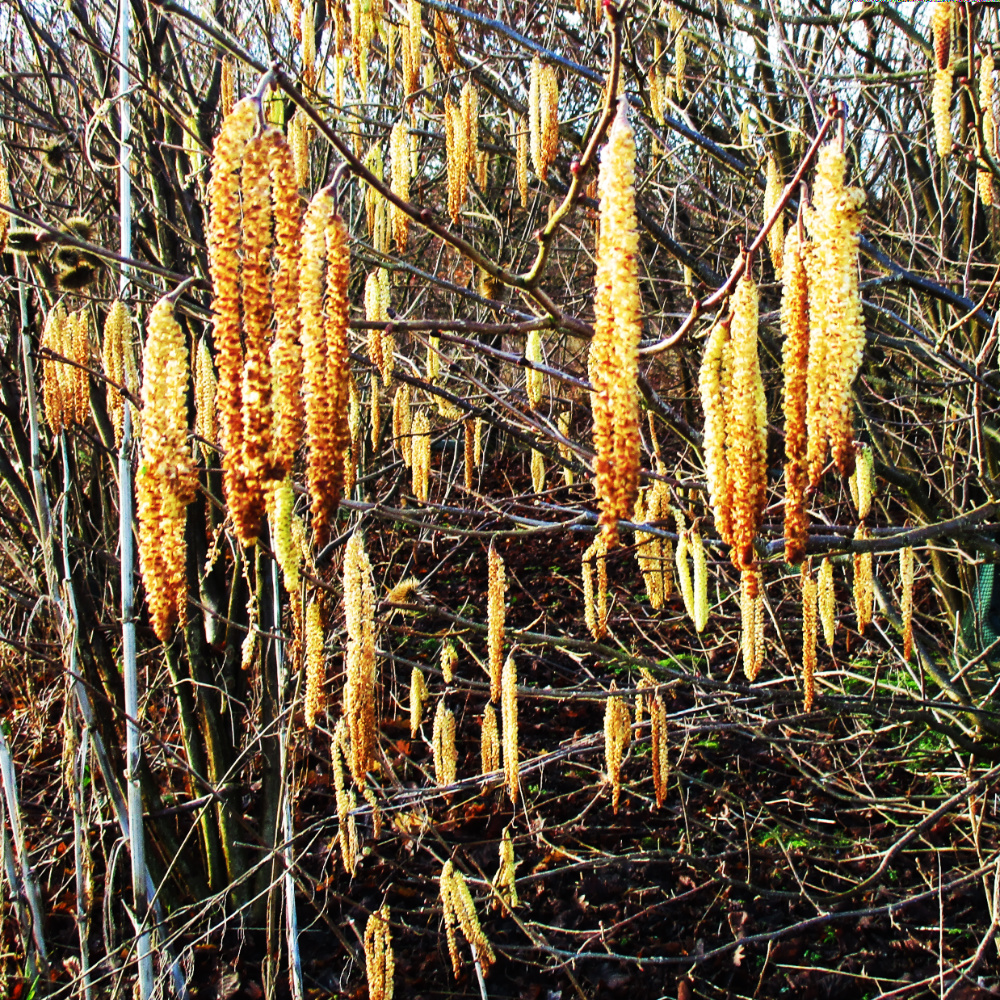
Staircase by stokpic

Photo by stokpic at pixabay

Couple of weeks back, when I wrote of my plans to publish Feast Fables as an e-book, I promised regular updates on progress (see A Makeover for Crimsonprose). I now realise if I wait the month round I risk my promise being swallowed by the Christmas Posts. Besides, there’s probably more to say now than there will be later. But first . . .

Backstory . . . or in the beginning

In the beginning there was The Hare and the Adder, a story begun during my last few months at work before ill-health (CFS) forced redundancy. Redundancy atop the ill-health forced an urgent need to downgrade, downsize, offload . . . MOVE. It wasn’t a wise move, and immediately regretted. Short version of complex events: escalating stress laid low my immune system, nasty bugs entered including a virus that wheedled its way across the blood-brain barrier to infect brain, meninges and spinal cord. Convulsions, projectile vomiting, loss of awareness (I’m told I wasn’t unconscious), a mouth become a babbling brook full of obscenities (though I seldom swear), and a headache that out-ached my worst ever migraine. Oh joy! I was rushed to hospital. Viral meningitis and encephalitis. Two weeks prior I had sent off The Hare and the Adder to an agent.

A full week on acyclovir delivered intravenously, I was discharged. There followed another week on acyclovir tablets—and a stumbling grasping for words. The virus had broken connections, many of my memories were gone. I couldn’t put names to people’s faces. I couldn’t put names to the objects around me. I couldn’t read the book I’d been reading before the virus. Though not returned entirely to illiterate state, I couldn’t grasp abstract concepts. I couldn’t write, exhausted after three sentences of the most basic English. I shan’t bore you with details.

Another month on and thud, my manuscript landed on the door mat. Hand written note. The agent liked it, but it needed a rewrite. But for quite some time yet, that was beyond me.

I took myself off to the North Norfolk Coast for self-imposed convalescence. CFS hadn’t yet kicked in to its extreme degree, I was able to walk 5 or 6 miles a day. (Before CFS I’d walk 15 miles then go clubbing and dance until the dawn.) While strolling beside the sea inspiration invaded me. By the time I returned home I had already head-plotted a new story. Writing it forced a return of language abilities—so long as a dictionary sat beside me. 40k words; I was concerned it was too short but submitted it anyway. Not surprising it winged its way back in double-quick time, rejected. I was later to take that story, Blide the Wood-Elf, with major alterations, and weave it into the blogged time-slip story, Neve. Persistent as ever, and with a head now working (though maybe not yet full capacity) I wrote Skimaskall, which story was also woven into the blogged Neve.

Meanwhile, I figured while I was recovering my language abilities, I’d also brush up on my writing skills. Oh, you mean you can’t just write and that’s it, talent will carry you through? Alas, apparently not.

I thought good and long about The Hare and the Adder. I wasn’t yet ready to return to it (it eventually became part of the Priory Project, another serialised story posted here). But there was a character, Kerrid, a bit of a mystery who screamed for backstory to explain some of her ‘strange’ abilities and her role in the events unfolding. I decided to make her my project. I’d write her story. And so began Feast Fables. BTW, its first working title was In The Beginning.

First, the restructure

Feast Fables has been through so many rewrites I’ve lost count of them. I do remember being horror-struck at the wordcount on the first draft. 180k words. Too many. Yet it was little more than dialogue, brief notes on settings, a few ‘stage directions’ and Kerrid’s cogitations and her reaction scenes. By the time I’d rounded it out the wordcount had more than doubled. No way would a publisher take that from an unknown author. Who did I think I was: Tolkien? Another edit. And again, it grew. With great reluctance I decided to divide it into a . . . the word didn’t want to spill from my tongue . . . a trilogy. But there wasn’t a publisher alive who’d take that. No matter; I was already having discouraging thoughts on the traditional route.

I tried to divide the word-heavy Fables so each part weighed roughly the same. Mistake. Though that’s how it stayed when, CFS now become physically, mentally, socially crippling, I realised the only way I’d ever ‘get it out there’ was to post it to blog in serial form. December 2012. Six years after the meningitis/encephalitis disabled me.

My first task on this current rewrite has been to restructure it. Yet again. A whole wadge at the end of Book 1 by subject matter belongs to Book 2. Now when I look at the structure of Book 1 it really holds. It balances. It . . . satisfies. I’ve also abandoned the 3-act structure to use 5 acts instead. Each act has its own inciting incident, MP and climax, which kicks the reader into the next act. MP of Act 3 doubles as MP of Book 1. But this is a trilogy; the 5-act structure repeated across the 3 books, the story’s MP falling in Book 2.

I’ve gone through all three books. The structure holds. But there is a problem. Book 2 now contains that chunk snipped off the end of Book 1. It’s going to need a severe verbiage reduction. I’m hoping that won’t prove too ticklish. I remember, when analysing the scenes (checking on structure), there were those I allowed to remain for the sole reason of what I called ‘veracity’. They’ll have to go. I just hope they fall more or less equally between the plot-points so as not to skew the structure.

Rewrites and Edits

So much for structure. Now the rewrite.

In Feast Fables (as posted—though all links have now been severed) the story begins with Kerrid a child of seven years old. I remember being worried that she came across of somewhat precocious. Also, there’s a scene in the second act suggestive of paedophilia. Okay, so at this point I’m beginning to build a case against this character which will explode in full force in Book 3. But that scene feels too heavy. To make my protagonist edging on womanhood changes the flavour entirely while still raising the reader’s hackles.

I played with that, applying the changed age to other aspects of the story. And lo, it works better. For a girl to come into her full powers at puberty is a genre trope. I’d say it’s a life trope, too. It’s this difference in age which requires the most rewrite; a constant attention to her reactions to situations and people, and others’ reactions to her.

As far as the rewrite’s concerned I’ve reached what was posted as Episode 13, but is now Chapter 10. I would be way past this if it weren’t for the editing. How easy for those unwanted filter words to flit past the eyes when the brain is otherwise engaged. How easy to get carried away with the story, oblivious to potential barriers to the readers’ experience. And this of a text that’s already been edited . . . how many times? I don’t want errors tripping my beta readers when that time comes. They deserve more respect than that. I don’t want them thinking they’re there as editors.

The other focus of the edit is description. I have visualised every location, down to its most intimate detail. I have sat with the women while they treated the skins and wove the fabrics, and fashioned them into clothes. I’ve been beside them during the Mother’s wild harvest. I’ve been with Kerrid when an ice sheet collapses and a tsunami sweeps over her. I’ve been with her aback an albino aurochs. I’ve been with her entranced in the Web. To me it’s all so familiar, I sometimes forget the reader’s doesn’t share my familiarity; the reader’s not in my head. This, as I progress, is being corrected.

Thoughts on beta readers

For some quirky reason I had thought to rewrite & edit all three books before releasing to beta readers. I’ve revised that. Though I still intend to hold back on publishing until all 3 books are ready to go (cos then is going to be a busy period, with promoting etc) I can see no reason to do the same with beta-readers. After all, my readers could raise issues that require another major restructuring, and that could affect all three books. So, as soon as this first one is ready, I’ll release to my volunteer readers. Though, I’m sorry, I still can’t say when that will be.

A note on health: I am now on the far side of CFS. And the brain being plastic, it has mostly recovered from its viral attack. (Tis true, some words still evade me and in frustration a pterodactyl becomes a pteri-saurus, or a rainbow a prismatic-arch.)


Next update, mid-January.

Posted in On Writing, The Spinner's Game | Tagged , , , | 4 Comments

The Migrating Village of Saxlingham Thorpe

Returning to the Norfolk village of Saxlingham, Nethergate and Thorpe, we’ve arrived at the High Middle Ages: post-Hastings, post Norman Conquest and all that.

Saxlingham Nethergate

Saxlingham’s war memorial, sat the centre of the village: Photo 1st Aug 2017

While William and his mail-clad henchmen hadn’t treated kindly with the English lords of this land, neither had they eradicated the defeated with their commended free men. Kicked them, true. Ground their faces into the dirt. Figuratively? Definitely. Literally? Probably. But those who hadn’t been killed at Stamford Bridge and at Hastings, and who hadn’t died in the several rebellions which, in the first years after Hastings, spontaneously flared to scorch William’s face, either fled the land to seek succour in Ireland, or Denmark, or Flanders, or farther afield, else learned to keep their heads low and to say, ‘yes sir, no sir, three bags full sir’.  In this, as with the rest of England, the folk of Saxlingham were no different.

Domesday Survey

We’ve already looked at the Domesdays Entries for Saxlingham (see Enter the Scribes ) so this is by way of recap.

Tenants-in-chief:

Mostly foreign (at least to English eyes—though some 13 Englishmen were counted amongst them). Foreign, but not necessarily Norman—except for Saxlingham almost all were. Many Bretons settled in England, as too French from various quarters, and Flemings from Flanders. One thing all had in common was their reason for crossing the Channel, for treading upon this conquered land and it wasn’t thoughts of settlement, of making this land their home. They came with an eye to a quick profit. As with the later British upper echelons on their first arrival in India, they retained their castles and estates across the water, in their native lands.

There were eight tenants-in-chief in Saxlingham.

Robert Malet

Norman-born son of William Malet, and possibly an English mother.
His father William Malet, lord of Graville in Pays de Caux, arrived in England in the Conqueror’s party and was granted lands mostly in Yorkshire where in 1068 he was sheriff, later appointed castellan of York castle. William died 1071 during the Hereward rebellion. Robert founded the priory at Eye in Suffolk in his memory. He was granted most of his father’s lands.

Roger Bigod

From Calvados, Normandy
Like William Malet, Roger Bigod arrived with the Conqueror. Unlike Malet, Bigod’s family had been of the middling sort. Once in England Roger Bigod made himself indispensable to the new king, serving as steward, and later as sheriff. In return, Roger was awarded what might appear a generous honour. But if an Honour consisted of lands, demesnes, and home farms, a means of income, a source of food, he didn’t quite cut it. The bulk of his holdings, as in Saxlingham, were free men, and it was the free men’s land. Yet it did yield him an income. Roger founded an abbey at Thetford, close to his Norfolk manor of Forncett—though his descendants are better known for Bigod’s castle at Framlingham, Suffolk.

Walter Giffard

Son of Walter count of Longueville in Normandy
As with William Malet, Walter Giffard’s father (confusingly also called Walter Giffard) arrived with the Conqueror. It’s said he was created Earl of Buckingham for his gallant services at the Battle of Hastings. The father, not the son? Certainly, the father was honoured with a vast estate in Buckinghamshire. Yet it was William the Conqueror’s own son, William Rufus, who created Giffard earl and that to secure his loyalty in the brotherly skirmishes that erupted between Robert Curthose, Duke of Normandy (1087-1106) and William Rufus then King of England (1087-1100). Walter Giffard (junior) served as one the Domesday Commissioners. Compared to the rest of Saxlingham’s new lords, he was high status, related by marriage to Normandy’s ducal family.

John fitzRichard

Nephew of Waleran, grandson of a moneyer from Avranches
As with Roger Bigod, John wasn’t aristocratic-born. Though it can’t be said he was from a ‘no-bit’ family since his grandfather had been a moneyer! Once arrived in England, his uncle Waleran was appointed sheriff, but when, and of where, no one seems to know. But since his predecessor at Saxlingham, Eadric, came a cropper against him, one imagines his remit must have included Norfolk. Like many of the newcomers, John gave land (in Saxlingham) to a religious house (to Gloucester abbey). This bout of benevolence, almost fanatic, seen amongst the first takers of this land, was at the insistence of the Pope who had been disgusted by the brutality of this conquest.

Drogo de La Beuvrière

From Flanders, Drogo (Dreux de la Bouerer) was another early arrival being part of William the Conqueror’s entourage. He didn’t stick around long, fleeing overseas after the death of his wife, said it be by accidental poisoning. Oops! His ‘Honour’ had centred on Holderness, with lands spread throughout Lincolnshire and Norfolk. After his departure, never to be seen again (a complete disappearance from history) his lands were given instead to Odo, count of Champagne.

Robert fitzCorbucion

Possibly from Verdun in Manche, Normandy
Robert is one of those characters difficult to trace. But if he’s the son, brother or otherwise relative of William fitzCorbucion (later sheriff of Warwickshire), then he’s from Verdun. Which would seem likely in view of later developments in the village of Saxlingham.

And an English tenant-in-chief…

Godric the steward

Former steward to the Anglo-Breton earls of East Anglia, Godric, whose own ancestry is blurred, married into a well-attested Norfolk family when he took as bride Ingreda daughter of Edwin (see Edwin of Meltuna). Through her he inherited a portion of Edwin’s lands, and all his lordships.

In the south of England, the religious houses had been major landowners; not so much in East Anglia due to the destruction wrought by the Great Army. The religious establishments might retain their lands—at a price. Everyone, no matter status, was required to swear loyalty to William, plus pay a fee to regain what he’d taken from them. Those that refused? Removed from the pages of history.

St Benet of Hulme

This Broadland abbey is said to have been founded on the site of a C9th monastery where a hermit, Suneman, was martyred by marauding Danes. And maybe that’s the truth though the story is late. Later, in tenth century, it was rebuilt by a man named Wulfric. Again, this might be true. But what we know is true is ca.1022 King Cnut endowed it with the manors of Horning, Ludham and Neatishead, all of which lay nearby. Thereafter it became like a magnet for those wishing to swap an odd acre or two in return for their soul’s salvation; or for those who in reaching their uppers needed to mortgage their land. Basically, this is what Eadric, predecessor of John fitzRichard had done when in trouble with John’s uncle, the sheriff Waleran.

Subinfeudation

For tenants-in-chief with estates vast and far-flung sub-tenants were a necessity—usually termed as ‘subinfeudation’. Often these sub-tenants were lesser members of the family, else favoured servants brought over the water. Others had already served as loyal lieutenants and sergeants in their lord’s household. At this stage, they didn’t so much pay monetary rent, as rent in services. Foremost of those services was the oath of fealty. Much like the Saxon commendation, this was a promise to stand by his lord, as the lord would stand by his man. Next in priority came the provision of x-number of armed and ready men, both to act as garrison to the lord’s castle and to form a warband. Thereafter might be various payments in kind from the yield of the land.

In Saxlingham:

St Benet’s of Hulme sub-let 1½ carucates (180 acres) plus another 30 acres with a sitting sokeman and 4 acres of meadow to John fitzRichard, nephew of the elusive sheriff Waleran. Plus the abbot leased him a further 10 acres of arable, making the total held of the abbey 220 acres arable.

Robert Malet sub-let a total of 72 acres arable and 2 acres of meadow along with 3 and a half sitting sokemen to one Walter de Caen. Walter de Caen held several Malet properties. One wonders a connection.

Roger Bigod generously granted to his man, Ranulf fitzWalter, 24 acres arable and one of meadow, plus the lordship of a free men, whose land it had formerly been—with full strings of infeudation attached.

Robert fitzCorbucion, like those above, preferred to place a sub-tenant in his Saxlingham estate. He chose Gunfrid to hold his 2 acres of meadow and a total 33 acres arable, 3 acres of which was courtesy of 2 sitting free men.

Of the remainder of Saxlingham’s tenants-in-chief:

Godric the steward used his total 61 acres arable, plus two sitting sokemen, as a home farm, to supply his food and other needs.

Drogo de La Beuvrière, ditto for his total 304 acres arable and 4½ meadow, complete with ten sitting sokemen and the lordship of a sulking free man who probably clutched tightly to his paltry 6 acres. These had formerly been the lands of Æthelweard, a free man of King Edward, and of Wulfnoth, a free man in commendation of Archbishop Stigand, almost certainly a member of Wulfgyth’s family (see Wulfgyth of Karletuna)

In addition to the land held of St Benet’s abbey, John fitzRichard, nephew of Waleran, held another 40 acres arable and 1½ meadow in Saxlingham, held in his own right.

And Walter Giffard?

Lordship

Lordship was that thorny problem that caused so many of the contretemps that litter the folios of Domesday Book. In Normandy–and France and other Francey-bits in general—land wasn’t held by the king and let out on feudal terms. Land belonged to the lords, and they let it out—on feudal terms. Across the water, a free man sat on land courtesy of his sworn-lord. Not exactly the Saxon situation, where its equivalent, commendation, involved services only, a personal bond, unrelated to land. Hence there were many an incoming lord who banged his head—probably damagingly hard—against a stick-with-the-soil Saxon free man.

One such was Walter Giffard. He had lordship, only, of his fifty acres arable, two of meadow, there being two sitting free men formerly in commendation to St Benets abbey

Normans to Plague

Medieval Saxlingham Map

Domesday Survey and its resultant Book is a wonderful resource for historians, but it tells us nothing of the years thereafter. Although a regular form of record-keeping was instigated by Henry 1 (1100-1135) anything written on parchment, or its upmarket version, velum, was by its nature vulnerable to flames. And the years that followed King Henry’s introduction of clerical innovations were too often bloodied by warfare and scorched by flames. Consequently, few scraps remain and those almost exclusively found in the monasteries: the accounts of chroniclers—monks to a man; the abbeys’ records, sometimes fraudulent, to which the guilt-ridden, sin-laden Normanesque magnates (tenants-in-chief and their sub-tenant under-lords) made their frantic donations to save their souls. Lucky, then, that some parts of St Benet’s records remain—and here, again, I am grateful to Mary Muir’s history of Saxlingham, A Good Place to Call Home.

de Verdun Family

Regardless of what Domesday Book tells us, when we arrive in C12th we find only two main tenants of lands in Saxlingham. The Verdun family was one.

John de Verdun

John de Verdun hits the historical notice in the complaints of the abbot of St Benet at Hulme.

Between 1101 and 1107 the abbot told the king—Henry I—how several times Roger Bigod and John de Verdun had made encroachments on various parts of his land. That land had been held by John fitzRichard 1086. If the intent of Bigod and de Verdun was to jemmy John fitzRichard off his land, it failed. As with de Verdun’s family, fitzRichard’s kin dug in their heels and stuck around—but more of that anon.

An unnamed man, sworn to Roger Bigod, caused an outrage when, with the abbot recently deceased and the land in the ‘king’s hand’ (as it’s said) he ‘carried off’ five of the abbot’s sokemen: Colsweyn, Langelsyn, Truinwine, Stannard and Anund by name. Naughty Bigod, for he was sheriff and sheriffs were supposed uphold the law and keep the peace. The unidentified perpetrator of this crime was almost certainly John de Verdun. For shortly after this, Bigod granted to him his Saxlingham holdings. (One wonders what happened to Ranulf fitzWalter who in 1086 had held this land of Bigod.)

Who was this John de Verdun? Since Robert fitzCorbucion hailed from Verdun (Manche, Normandy) it’s a fair guess that John was related, either to him of to his sub-tenant Gunfrid.

Mary Muir traced Verdun’s manor—known as The Vardings—on the OS map. I’ve tried to locate it according to her directions (see map). Bounded to the west by the River Tas and Newton Flotman, it didn’t quite reach the old Caister-to-Morningthorpe Road (parts of which today exist only as footpaths). Verdun’s Hall, says Muir, was almost certainly located at Hall Meadow where a moat was marked on the old maps. She and a band of volunteers excavated it before it was infilled in 1976. They found medieval sherds and fragments of a metal cooking pot, and a rammed clay floor or hearth. Today this area is counted as the main part of Saxlingham Thorpe.

Along the road to Saxlingham Thorpe

Along the road to (today’s) Saxlingham Thorpe, the depth of the bank shows its age. Stand on tiptoes to see the fields that once were part of Vardings: Photo 1st August 2017

The Vardings was held by the de Verdun family until, in 1319, Eleanor de Verdun, widow of a later John de Verdun, sought permission to marry Richard Le Breoies. Or at least this is what Mary Muir says in her history. So, I followed that through . . .

Richard Le Breoies, otherwise known as Sir Richard Brews, son of Sir Gyles Brews lord of Akenham, Whittington, Clopton, and Hasketon (Suffolk manors held of the Honour of Lancaster) married Eleanor, daughter of Sir John Shelton. The couple had 2 daughters but no sons. Thus, when Richard died in 1323 his brother Robert inherited. Trouble was, his brother was still a minor. Robert Fitz-Pain was granted his custody—one assumes he was the king’s escheator. Fitz-Pain assigned the youngster to Edmund Bacon, who was currently in the king’s service in Gascony. (Which goes to show that custodianship was a financial affair and had nothing to do with care of the child.) Whoever was doing the actual caring, their charge died two years later. Next in line was an even younger brother, John de Brews. However, John survived his minority—assumingly still in the custody of Edmund Bacon—and went on to marry Agnes, daughter of Sir Robert Ufford, Earl of Suffolk. What one might call a good match, and a step up the social ladder.

However, this isn’t the story told by Francis Blomefield in his History of Norfolk, nor that revealed by the medieval genealogy site, fmg.ac.

Bucks_and_Bressingham_Verdun_Gene_Charts

As can be seen, fmg.ac starts with a Bertram de Verdun, holder in Domesday Book of Farnham Royal in Buckinghamshire. Blomefield begins his with William de Verdun who in 1100 was Lord of Bressingham, holding the manor of sheriff Roger Bigod. The two come together at William de Verdun, fl.1166 when he held 6 fees of Hugh Bigod, Earl of Norfolk and Suffolk—except fmg.ac isn’t sure this William de Verdun is the same as William son of Norman de Verdun, and Blomefield seems to get stuck in a loop with him, making him both father and son. Admittedly it isn’t easy: the Verdun family did have a penchant for name-repetition (see the next Verdun Gene Chart in which, after a little bit of jiggling with Blomefield’s account to make chronological sense, I have added [II] to [V]).

Fmg.ac quotes the Pipe Roll of 1194: ‘Manaserus Judeus de Gipesw’ owed gold ‘pro recto de xx m versus Willelmum de Verdun et Bertrannum fratrem suum’. Thus there’s no doubt that William de Verdun did have a brother Bertram. More on, fmg.ac quotes the Red Book of the Exchequer in which, in 1166, ‘Willelmus de Verdone’ held six knights’ fees from ‘comitis Hugonis’ in Norfolk–source of Blomesfield’s account. As to Hugh de Verdun, Blomefield aliases him as Wydo, i.e. ‘Guy’.

However, the fmg.ac route then veers well north and west of Saxlingham, while it’s clear from Blomefield’s genealogy, with lordships given, that the Bressingham lord was also lord of Vardings in Saxlingham—and of Moulton Magna, Aslacton, Tibenham, Hapton, Shadingfield and eventually Forncett which lie on a route between Saxlingham and Bressingham. But whether the Bressingham family of de Verdun was is any way related to those of Buckinghamshire and several points north and west hasn’t been proven, and unless it helps with the problem of widow Eleanor and the future lords of Saxlingham, it isn’t relevant.

Problem: How could John de Verdun V be Lord of Saxlingham in 1344—and he was else how could his second wife, Isabell, inherit the manor in 1365 along with Moulton Magna (see Verdun’s Gene Chart below)—when a previous John de Verdon had given it to his wife Eleanor as dowry and she subsequently took it with her to grace the property portfolio of her new husband, Richard Brews? And which John de Verdun had this wife Eleanor? Though there are some with wife’s name unknown, what of their end dates, might that help? For Eleanor to be appealing for permission to remarry in 1319, her John de Verdun must have died prior to 1318 (a widow was supposed to grieve at least for one year, preferably more—which allowed her guardian to cream more money off her estate.) She must therefore have been the wife of John IV who died in 1302 and whose son Thomas succeeded him. But then why wait for her son to die before seeking permission to remarry? Maybe she didn’t get on with her grandson’s wife, Maud.

A closer read of Blomefield’s account of Bressingham in his History of Norfolk provides the answer. Despite he makes Wigona/Dionisia the widow in question, he then has her marry Sir Richard Le Brewse who is recorded, in 1315, as Lord of Bressingham (thus also of the Saxlingham manor). He quotes from the manor’s 1326 Account Rolls:

Sir John Verdon was at 47s. 4d. expense for cloth, against the burial of the Lady Brewse

In 1335, this same Sir Richard Le Brewse had a share of the swans from Bressingham fens (Bressingham sits on the north bank of the River Waveney).

When Richard Le Brewse died, his share of Bressingham (and Saxlingham) was returned to Sir John de Verdun [V]. But, again, confusion. For according to Blomefield, Richard le Brewse was alive in 1354. Yet John de Verdun became Lord of Bressingham in 1344. Ah, but while Richard Brewse held the Vardings in Saxlingham in its entirety, of the Bressingham manor it seems he held only a portion. Problem solved.

Returning to the wife of John de Verdun [V]—Isabell, daughter of Sir Thomas Vise de Lou of Shelfhanger—her husband settled on her the Suffolk manors of Martlesham, Stansted, Swiftling and Newbourne, and the Norfolk manors of Saxlingham and Moulton Magna, all which he entailed on themselves and their heirs. In plain-talk, this means that, contrary to Ms Muir’s account, the Saxlingham manor of Vardings continued in de Verdun hands, except now it was occupied by a long string of sub-tenants.

Verdons_Gene_Chart_1

Roger Bigod Earl of Norfolk

It should be remembered that the Verdun family held their manors of Saxlingham, Bressingham, etc, of the Bigods, earls of Norfolk. But in 1306 the fifth and last earl of that line died without ’heirs of his body’. Verdun’s estates then reverted to the Crown along with all else that constituted the former earldom. Of course, the Verdun’s continued to hold those manors, Saxlingham included, but now they held of the Crown—at least until 1312 when they were assigned as part of the former earldom of Norfolk to Thomas Brotherton, half-brother to King Edward II. When he died in 1338 the lands and title went to his daughter by Alice de Hales, Margaret surnamed Marshall.

de Vescy Family

The de Vescy family, the other main landholder in Saxlingham post Domesday Survey, was descended from John fitzRichard, nephew of Waleran

Road to Saxlingham Thorpe

Once the de Vescy manor, now the road to today’s Saxlingham Thorpe: Photo 5th April 2017

John fitzRichard

John fitzRichard amalgamated his various portions of land in Saxlingham, some of which he held of St Benet of Hulme, some in his own right, to produce what would later be known as Berewell and Thorpe Hall manors. In Domesday Book these two manors totalled 260 acres arable. At that time, he also held land (2 holdings) in Suffolk, (2 holdings) in Cambridgeshire and Essex—which constituted the bulk of his holdings (10 listings plus a house in Colchester). His Norfolk holdings fell one short of this.

Whoever his wife (her name’s not recorded) she delivered him two sons, Payn and Eustace. Maybe it was due to the wife’s influence that the family’s focus now swung westwards; or maybe it was due to their eldest son, Payn.

Payn fitzJohn

Described by Walter Map as a chamberlain, and attested as hearing pleas in Staffordshire, Gloucestershire, and Pembroke, Payn fitzJohn married a de Lacy lass, daughter of Hugh de Lacy. Originally from Lassy, Calvados, by now the de Lacys were building wealth and reputation from South Yorkshire to Herefordshire. In time, Payn would inherit some of this. But which came first, Payn’s marriage to Sibylla de Lacy, or his appointment as chamberlain, and as Sheriff of Hereford and Shropshire?

This West Country focus continued when Payn’s eldest daughter Cecily married Roger fitzMiles, son of the earl of Hereford. His second daughter, however, married Warin son of Hubert de Munchensy, a family with landed interests in Norfolk and Suffolk; widowed she married again, now to Halenald de Bidun whose family was destined to give their name to Kirby Bedon in the same Henstead Hundred as Saxlingham.

John’s lordship of Thorpe Hall at Saxlingham passed to his son Payn, and when Payn died in 1137 it passed to the next brother, Eustace fitzJohn, who held it for another 20 years. From Eustace fitzJohn it passed in logical fashion to his son, William—which is when the family changed its name.

Eustace fitzJohn

Eustace fitzJohn was active in King Henry I’s court. With the king’s keen administrative bent, he appointed Eustace to hear pleas in Yorkshire, Northumberland, Carlisle, Westmorland and Durham (a kind of outreach judge). While in the north, Eustace married Beatrice, daughter of Yves de Vescy, lord of Alnwick in Northumberland and Malton in Yorks (he was later to marry Agnes, daughter of the constable of Chester). Both marriages gained him landed wealth. Along with his wife he co-founded Alnwick Abbey. Clearly the family’s focus had now swung northwards.

Their son William’s focus, however, swung upwards, status-wise. Born fitzEustace, he preferred his mother’s more upmarket name, and so adopted it.

Vescy_Gene_Chart

William de Vescy and his wife Burga (a Yorkshire lass from a Norman family) begot five children, 3 boys and 2 girls. But our interest lies only with the second son, Eustace de Vescy (the first son died young).

Eustace de Vescy

In 1212 Eustace de Vescy turned his interests yet farther northwards. He fled to Scotland under suspicion of treason against King John (r.1199-1216). Declared an outlaw, his English properties were seized. However, the devious tongue-twisting, cash-grabbing King John had second thoughts on it and, forgiving Eustace, restored his properties. Forgiven and restored though he was, Eustace de Vescy continued his discontentment with the king. He was amongst the leaders who thrust their demands at King John in the form of Magna Carta (signed on the plain at Runnymede, June 15, 1215). Still not content with England’s monarch, those same barons invited Louis of France to rule over them. Eustace was on his way to do homage to said Frenchman, with Alexander II, King of Scotland, when he was killed during the siege of Barnard Castle (1216).

And the relevance of this to Saxlingham?

Carliol Family

When Eustace fitzJohn married Beatrice de Vescy the family’s interests turned decidedly northwards—to solidify when their son William took the (northern) de Vescy name. The Saxlingham estate must have been like a millstone, periodically calling their attention back south. So, William de Vescy off-loaded it. He piled all their Saxlingham lands, including his watermill at Newton Flotman, upon his daughter and married her off to one Adam de Carliol.

We know this because the story was told at an inquisition, at the chancery at Lincoln, on 12th February 9 Edward II (1316). The inquest was called to clarify just who was the legal heir to the Saxlingham estate.

[…] William de Vescy the stock (stipes), ancestor of the said William lately deceased, had a son Eustace and a daughter Maud, and through Eustace the right of his inheritance descended to William his son, to John his son, and to William de Vescy, brother of the said John, who lately died without heir of his body; where-upon the right of inheritance reverted to the said Maud, sister of the said Eustace, who was married to Adam de Karliolo, from whom it descended to Eudo de Karliolo her son, to William his son, to William, the second, his son, and to William de Karliolo, the third, his son and heir who now claims it.

The jury being demanded how they know this so openly, seeing that the late William de Vescy had no lands in Norfolk, say they know it because William de Vescy, the stock, gave the manor of Saxlingham, co. Norfolk, in free marriage to the abovesaid Adam de Karliolo with Maud his daughter, to be held of himself and his heirs by service of 1/2 knight’s fee, and also certain lands and tenements in Saxlyngham to be similarly held by service of 3/4 knight’s fee, which Simon de Goseford and Peter de Narford now hold of the said William de Karliolo.

Verdict returned in favour of William Carliol. Case dismissed.

Newton Flotmill Mill

The mill n the River Tas at Newton Flotman,, and the bridge that carries the old Roman Road: Photo 1st Aug 2017

Thus did John fitzRichard’s Thorpe estate go, circa 1170, to the Carliol family via the granddaughter of John’s son Eustace. And his oddments of land in Saxlingham Nethergate?

Apparently the Verduns had acquired at least the (Nethergate) church some time before 1231 when they went into dispute with the Carliolos over the right to appoint the rector to Beate Marie de Saxlingham Nethergate church.

St Mary's Church, Saxlingham

St Mary’s Church, the north aisle: Photo taken 1st Aug 2017

Carliol Family of Saxlingham and Annandale

(Sourced from A History of the Ancient Family of Carlisle, London 1822, by Nicholas Carlisle)

The name ‘de Carliol’ stems from the Barony of Carlisle; it means ‘from Carlisle’. There, in Wetheral parish, a knight, Hildred, was lord of Cumwhinton manor. At the Norman Conquest the newly appointed earl of Carlisle and Cumberland, Ranulph de Meschines, confirmed his possession. Later, as appears in an Assize Roll of 1210, William Rufus, and Henry I both added to his holding.

Henry, King of England, to Walter Espec, Eustace fitzJohn, and Orlando the sheriff, and all his faithful subjects of Cumberland, French and English, greetings . . . 

Know ye, that I have given and granted to Hildred de Karleolio, and Odard his son, the land which belonged to Gamel fitzBern, and the land which was the property of Glassa, son of Brictric, my Drengs…

i.e. ‘a large possession east side of River Eden’

When Hildred de Karleolio’s son Odard predeceased him, Hildred divided this considerable estate between his two grandsons, Robert and Richard. Robert de Carliol was assigned the more ancient, ancestral portions.

Carliol_Gene_Chart

Adam de Carliol

The first that’s seen in the historical records of Adam, son of Robert de Carliol, is amongst those standing surety for Alan, son of Roald, constable of Richmond castle (Yorkshire). Alan petitioned King John in 1201 for the return of said castle. According to author Nicholas Carlisle (see note regards sources, above), this Adam de Carliol was the first of the family to settle in Annandale (in Scotland).

As we’ve seen, this same Adam de Carliol married Maud de Vescy. But he wasn’t the only husband of Maud de Vescy. Maud also married Thomas de Muschamp. And if Thomas died in 1172, and Adam was alive and standing surety in 1201, it’s a fair guess that he married Muschamp’s widow.

Fmg.ac mentions only this first marriage, citing an undated charter relating to Alnwick Abbey, Northumberland:

‘Eustachium de Vescy, Matildam et Ceceliam’ are given as the children of ‘Willielmus de Vescy senior’ and his wife ‘sororem domini Roberti de Stutevill […]

[The charter adds] Maud married ‘Thomæ de Muscampo’ by whom she had ‘Robertus de Muscampo, de quo…alius Robertus de Muscampo, de quo Isabella, quæ data fuit Willielmo de Huntercumbe, de quo Eustachius de Huntercumbe’

Relations appear to have been good between the de Carliol and de Vescy families with lands being exchanged between them. But there were altogether too many Williams amongst the de Carliols and it becomes impossible to distinguish one from another. For instance . . .

William de Carliol

In 1286, William de Carliol (the second, I’m assuming) was summoned to Norwich to answer by what right he claimed to have view of frank-pledge (a system first found in the Laws of King Cnut whereby every man must be bound to all others in the Hundred, his neighbours then standing surety for him; one trips foul of the law, they all pay) and the assize of bread and ale in Saxlingham (the right to regulate the weight and quality of these).

William de Carliol liked to apply his rights.

In 1291 William de Carliol (I assumed the same one) appears in the Charter Rolls as claiming to have free-warren in Saxlingham and Newton Flotman. But this was disputed by the jurors of Henstead Hundred who asserted that one Richard de Boyland had the custody of the manor of Saxlingham—ex dimisione Willielmi (le Karliol)—though they believed it was without warrant.

Then again, in 1297 a ‘William de Karliolo of Annandale’ was residing in Scotland, in the service of the king. Was he one and the same as the William de Carliol who demanded his rights in his manor at in Saxlingham? If so, did the Annandale estate pass to William de Carliol, heir to Saxlingham? And what of the Wortwell manor in the parish of Redenhall, Norfolk?

In 1298, the Wortwell manor belonged to ‘William Carlio’ (are we still talking William de Carliol II, or have we moved on?) and his wife Agnes. In 1299 it had passed to Richard Carliol (their son? – in which case the father must be William Carliol III).

Then there’s the little contretemps involving William de Carliol’s tenant, Simon de Gosford and his young son John.

Simon de Gosford and the Rebels of Sherwood

As seen in the report of the 1316 Lincoln Inquisition, Simon de Gosford held land in Saxlingham off William de Carliol—the Berewell manor. Not long after that inquest Simon’s wife gave birth to their son and heir, John de Gosford. When, two years later, in 1318, Simon died, that infant was given by the king into the custody of William de Montagu, King’s Steward. But why, when his overlord, who ought to have custody, was William de Carliol? Because William de Carliol was currently in disgrace.

Like other barons with lands in the ever-contested borderlands of Cumberland and Northumberland, the de Carliols adhered to whichever king was currently overlord of their land. More problematic was when the baron’s land was divided between the two kingdoms. Then which king was a man to serve: the king of Scotland, or he of England? And whichever he chose to serve, he automatically fell foul of the other. In 1318 he adhered to the Scottish kin, Robert the Bruce. Thus was a writ issued to the King’s Escheator saying that as William de Carliol—of Annandale and of Saxlingham—adhered to the rebels and enemies in Scotland, contrary to his fidelity to the king, all lands and tenements which belonged to said William (together with the lands and tenements which belonged by inheritance to the infant John) were now in the king’s hands.

In summer 1318 that king, Edward II, was informed that one ‘William of Shirewood’, together with other ‘evil doers and disturbers of his peace’ had abducted the young John de Gosford. King Edward issued a writ to his Escheator: the situation was to be investigated.

The King’s Escheator duly sent an Inquisition into the county of Norfolk, to Saxlingham where, on 8th October 1318, the jurors reported, on oath, that William de Shirewode, Nicholas Arnald de Shirewode and his son Lyne, did come to Saxlingham and carried away the said John de Gosford though the boy was only 18 months old.

It seemed there may have been more involved than abducting a child. For the same Escheator then reported that he’d been to Berewell (the name Gosford had given the manor he held of Carliol) where he found Lyne, son of Nicholas Arnald de Shirewode. So was Lyne son of Nicholas Arnald a tenant of the tenant, renting land on that same estate? Or in the absence of Simon de Gosford, had he planted himself there in the hope of gaining it through occupation? An early case of squatters’ rights.

As the Escheator explained to King Edward, he was unable to bring the child to the King’s court ‘on account of his tender age’; instead he delivered said child into the custody of William de Montagu, the King’s Steward, who, with his wife Elizabeth, had been granted the inheritance of all lands belonging to William de Carliol, now deemed a rebel.

Henceforth the Montagu’s become lords of Berewell and Thorpe Hall manors in Saxlingham, the one-time holdings of John fitzRichard, nephew of the sheriff Waleran.

Old Road from Hempnall to Saxlingham Thorpe

Along the old road from Hempnall to Saxlingham Thorpe: Photo 1st Aug 2017

Montagu Family

William de Montagu alias William de Montacute

William de Montagu, born to a prominent West Country family, distinguished himself as soldier and courtier in the service of King Edward I (r. 1272-1307), and his son Edward II (r.1307-1327)—mostly by serving in the wars with Scotland. As reward, in 1316 he was “granted the marriage of” Joan de Verdun, heiress/daughter of Theobald de Verdun who was currently the king’s ward. Taking advantage of this unexpected bonus, he wed the lady to his youngest son, John—who promptly died leaving the young Joan a widow. The same year (1316) he was appointed as Steward of the Household of Edward II, along with which he received a fat annuity of 200 marks. This was replaced in 1317 by the king’s grant—for life—of several manors, mostly in the southern counties. The following year he was appointed Keeper of Abingdon Abbey, a position he wasn’t allowed to hold for long since in November the same year he was sent to Gascony as the king’s Seneschal, it’s thought to avoid accusations of ‘plotting’. He died there in 1319 leaving as widow his wife Elizabeth de Montfort—who then married Thomas Furnivall, father of Joan de Verdun’s second husband, Thomas Furnivall, jnr., but that’s a different story.

The English lands of William de Carliol, including Saxlingham, passed to William de Montagu’s son, coincidentally named William de Montagu (1303-1344). In 1337 William son of William de Montagu was created Earl of Salisbury. When he died in 1344 the inherited lands of William de Carliol, including Saxlingham, passed to his widow, Katherine de Grandison, and when she died in 1349, they passed to the deceased Earl of Salisbury’s brother, Edward. Why to his brother and not to his son (yes, confusingly another William) I don’t know—except these lands wouldn’t have counted as patrimony and therefore weren’t tied to the by-now-operative inheritance rules of primogeniture.

Thorpe Hall described in a rental of 1317/1318

“The site of the manor there with alder grove and courtyard contains 18 acres of arable land. In which site is a certain moat built up [i.e. contains a house] and the courtyard outside the moat built with houses. It has no value on account of the need to repair the houses. Likewise a garden behind the barn if kept up as at present is valued at 5s, per annum. One part of the courtyard next to the gates which contains a house for the servants is valued at 6d per annum. One alder grove called the ‘park’ is valued in pasture and nuts at 5s. per annum.”

Not a prime property, then. Today, this ‘platform’, overgrown with bramble, dogs mercury, lively in spring with crab apples trees and hawthorn, serves as a covert for pheasants.

Edward de Montagu

Edward had married Alice, the granddaughter of Thomas of Brotherton, Earl of Norfolk (see above under Roger Bigod Earl of Norfolk), and a rather obscure-sounding Alice of Hales—as her name implies, a local lass from Hales near Loddon in Norfolk, and daughter of a coroner.

The granddaughter Alice presented Edward with six children. But when he died in 1361 only one remained from his first marriage—Joan de Montagu—and one from his second marriage—Audrey de Montagu. As was the law with daughters, his estate, which included the de Carliol lands, was divided equally between them.

Montagu_Genes_Chart

When Joan de Montagu died in 1376, her share of her grandfather’s estate passed to her husband (William de Ufford, son of Robert de Ufford, Earl of Suffolk) and his heirs—all of whom had predeceased him. And so this estate too—all but the Saxlingham portion—reverted to the Crown to be reassigned in 1385 to the newly created Earl of Suffolk, Michael de la Pole.

As to the Berewell and Thorpe Hall manors at Saxlingham, the Montagu family had not long offloaded it, sold to Sir John Wingfield of Saxmundham, Suffolk, (fl.1348, d.bf.1375) and his wife Alianore. When, circa 1360, their daughter Katherine married Michael de la Pole she took the Saxlingham manors with her, thus it was reunited with the Ufford-Montagu estate.

St Mary's ruins, Saxlingham Thorpe

Church ruins at Saxlingham Thorpe: Photo 5th April 2017

Deserted Villages, Black Death and Climate Change

Throughout Britain are remains of so-called ‘deserted villages’ which more often are the result of migration. Usually the Black Death is held to blame. And it’s true that folk who’d survived the worst outbreaks of plague refused to live in a place of death, fearing the (unknown) cause would erupt and infect them again (epidemics repeated through to the C17th). In Saxlingham Nethergate, too, the villagers moved away from the former centre around the church, focus of occupation since the Iron Age. Even today this space remains empty. But it wasn’t the plague alone that forced the migration. It was climate change, too.

It might be a hot subject today, but it’s not new. The climate has swung through hot and cold periods, some short-lived, some longer. Man’s activities have little to do with it. Rather it is solar winds, sun spots and cosmic rays.

The earliest megalith-builders gloried in sun-filled days and blue skies. Then came the Bronze Age and a swing to a colder, wetter climate. We see this in the change of religious focus, from sky to lake, river, and bog.

The climate was swinging back to warm by the time the Romans arrived. But by the time they departed the weather had changed yet again. Where the Romans had made a productive bread-basket of what’s now the Fens, by the early Anglo-Saxon period was awash with water, and this wasn’t the first time.

But again came a change. On the eve of the Norman Conquest Britain basked in a dryer, warmth climate—the invading Normans brought viniculture with them. They established vineyards even in the north. The French were most put out that England no longer imported their wines! But again, that was to change.

By C13th the climate was beginning to swing into another cold period, one from which we’re only now climbing. Courtesy of a bout of volcanic eruptions, this one resulted in what’s become known as the Little Ice Age, when winter fairs were held on the frozen Thames. The first sign of that change was a series of weather extremes. Dry summers in which grain failed to swell, followed by summers of rain that laid the grain low, unable to harvest it, inviting mildew and rot. Cattle and sheep, too, suffered disease. Result: famine.

The first half of the fourteenth century saw a series of widespread famines. Weakened by starvation, when the Plague arrived, the Brits had no resistance. In the first wave two-thirds of the population died.

How did this affect the folk of Saxlingham Thorpe whose village was built upon clay-lands? Those who could were already moving away—the hamlet of Foxhole was in evidence by early 1300s. The watermill at Newton Flotman, owned by the de Vescy-Carliol family, enticed folk to live nearer, less distance to carry their grain. Besides, that mill was always in need of repair, to its fabric and water-runs. Though there are hills in Norfolk, the rivers being in valleys have little gradient. To get a good flow a side-stream of the river must be diverted and held by a sluice till required. Another attraction in that direction was the convenience of the old Roman London-Norwich road that crosses the Tas on the Saxlingham border. Wealth in wool required easy access to ports, and Norwich had always been one of East Anglia’s main ports. Other people moved eastward, to settle around Eastgate Green (now Saxlingham Green).

Saxlingham Green

Welcome shade along Saxlingham Green: Photo 16th May 2017

Wash Lane, Saxlingham Thorpe

Saxlingham Thorpe’s problem was its soil. Though away from the marshy area that was Broad Slough, it was set on a great depth of glacial deposits. Not fast-draining gravels as found alongside the Tas valley, but impervious silts, i.e. clay. As Ms Muir notes in her book, one field here was called ‘The Sops’. An abandoned building (it’s marked on the 1881 OS map) was known as Mud Hall. Sitting at the top of Wash Lane, it now is known as Mud Hole. This is possibly the site of Thorpe Rectory as described by Muir, overlooking to south ‘Pirnow Green’ (it now is a field) around which she found evidence of medieval houses.

Mud Hole, Saxlingham

Mud Hole, last of the drainage remaining: Photo 5th April 2017

Mud Hall and Pirnow Green

Where once was Mud Hall and Pirnow Green: Photo 5th April 2017

My first reunion with Saxlingham Thorpe, a couple or three years back, prompted two questions. The first was easily answered: Why is Wash Lane so called?

Running parallel to the unpaved lane is a deep and wide gully, the original course of the Broad Slough’s Mesolithic tributary (see Written in Soil ). Into this empties the sub-surface field drainage system, gushing for weeks in a wet autumn. All would be well, but that the gully peters out mid-way along the lane—I’m told thereafter it runs underground, crossing the road at the village cross to join Broad Slough. So it might, but those pipes don’t cope with it, leaving the remainder of the lane to be ‘awash’ with water. Wellies essential.

Wash Lane, Saxlingham

Wash Lane, not awash: Photo 5th April 2017

Once the migration had started it didn’t stop, though the old village didn’t empty overnight. Pottery sherds have been found dating to C17th. But I’m jumping ahead.

Walter Giffard, Robert Malet, Godric the Steward and Drogo le Beuvrière

Saxlingham’s other Domesday holders.

It seems Walter Giffard gave lordship of his two free men with their fifty acres arable to St Benets abbey, their pre-Hastings lord. He had a large holding in Buckinghamshire, he didn’t need this small fry. Later, he served King William II (Rufus) as Justicar of England. But Giffard remained a major landowner in Normandy and when William’s brother Robert Curthose, now Duke of Normandy, invaded England in 1101, Giffard joined him—he died the following year, still in England, though his body was shipped back home for burial.

According to Ms Muir, the land held by Robert Malet—72 acres, in 1086 held of him by Walter de Caen—eventually joined Verdun’s manor of Vardings when William Malet married a Verdun wife. Unfortunately, Ms Muir gives no date for this and as the Malet family favoured the name ‘William’ details of that marriage, for me, remains unfound.

We know that the 60-odd acres granted to Godric the steward weren’t claimed by his son, and so reverted to the Crown to be reassigned to whomever. No record remains.

Which leaves Drogo le Beuvrière’s 310 acres arable, of whom Ms Muir says she knows nothing.

Odo, Count of Champagne, Lord of Holderness

I have already said of Drogo’s Honour of Holderness, in East Yorkshire, and how, when his wife (reputed a niece of William, King of England, Duke of Normandy) died of poison in suspect circumstances he took a ship never to be heard of again.

In 1087 the Honour of Holderness with its castle at Skipsea was granted to Odo, Count of Aumale. That’s one version. The other version has it granted to Odo’s wife Adelaide. Whichever the version, that Honour included Drogo’s East Anglian lands.

The story on Odo runs briefly like this: In 1047 when Stephen II, Count of Troyes and of Meaux, died, his son Odo was still a minor, and so his uncle Theobald III of Blois served as regent. But by 1060 Odo had come into his own and had married Adelaide, sister of William, Duke of Normandy, soon to be King of England. This wasn’t Adelaide’s first marriage–in fact, it was her third. Odo scooped jackpot when, in 1069, Adelaide’s first husband’s sole heir died and she inherited becoming Countess of Aumale. Through his marriage to Adelaide, Odo now took the title of count. In 1066 Odo accompanied William in the conquest of England. While he was away his avaricious uncle, Theobald III of Blois, seized Troyes and Meaux.

The keen-eyed reader might recognise the name of Adelaide, Countess of Aumale as successor of Wulfric, brother of Wulfgyth de Karletuna (see Wulfgyth de Karletuna), there I suggested the land bequeathed by Wulfgyth to her daughter Gode was that later held by Drogo le Beuvrière.

Although Odo and his wife were granted Drogo’s former Honour of Holderness with its East Anglian manors, his tenure was cut short in 1095 when he was imprisoned on suspicion of plotting to overthrow King William II and place his own son, Stephen, upon the English throne. And in view of William the Conqueror’s claim to the English throne through his great-aunt, Odo’s wasn’t so far out; through his mother Stephen was cousin to King William II.

Ironically, while Odo lost his English lands, in 1102 they were restored to his usurpering son Stephen by King Henry I.

While tracing the descent of the Honour of Holderness presents no problem, tracking Drogo’s former East Anglian manors—which includes Saxlingham—draws nothing but blanks. Yet I do know that King Stephen (r.1135-1154), grandson of William the Conqueror through his mother, grandson of Theobald III, Count of Blois through his father, was invested by his uncle, King Henry I, with a rich portfolio of East Anglian manors amongst which was Robert Malet’s former Honour of Eye and the Honour of Lancaster, which also included lands in East Anglia. It is possible along with these he received his cousin’s East Anglian manors, those of Odo Count of Champagne, and possible those of Adelaide, his wife. Although I admit, I’ve found no evidence to support this suggestion.

Black Death to Early Tudor

The massive death-count during the first few outbreaks of the plague resulted in a major change in the English countryside. Where were the peasants to work their lords’ lands, to produce the grain for him to amass and sell at a profit to fund his high-living? Alas, gone to graveyards, almost every one. How then was he to maintain his lifestyle? Answer: By grazing sheep.

England’s flourishing economy was already based upon wool. Wool was its major export. Raw wool, for the English hadn’t the skills in weaving found in Flanders and the Germanic counties south and east. Deprived of the backs to work the land, the upper crust turned their vast estates to sheep runs—and reaped an even greater harvest.

Small-holder tenants (the yeomen) weren’t long in following suit. They had money. Now they had opportunity. A goodly number invested their savings in buying up small parcels of land off their lords or neighbours. Soon those wily tenants were raking in profits off sheep as fast as the upper echelons.

Thus, we see in the village records at Saxlingham a series of otherwise unknown names, unrelated to any of the big news-worthy families.

In 1388 Netherhall (Saxlingham Nethergate Old Hall) was let to rent, no longer part of the manor.

In 1477 Thomas and Matilda Slyford held the ‘site of the manor called Manor Yard’.

In 1499 John Bremer held the manor ‘called Le Hallplace with 9 acres land…’

It was around this time that enclosure began.

Early Enclosure

Enclosure wasn’t a new phenomenon. The Statute of Merton (1235)—followed in 1285 by the Statue of Westminster—allowed for the enclosure of manorial common land. Aside from this there began the process of fencing off adjacent strips from the common field. Not that the common-field system had reached our part of Norfolk early enough to become ingrained in people’s habits. Neither was it practiced in the Midland way with a family’s strips being scattered across the whole. Rather, each family had their own discrete and fenced section of the ‘common field’. It made enclosure so much easier. Also, at this early stage, enclosure was by mutual agreement.

Tudor Period to Restoration

John Bremer held the manor of Le Hall-as a tenant of the Crown. In 1540, that Crown, worn by Henry VIII, granted the manor to Anne of Cleves as part of her divorce settlement. (He also granted her Costessey manor, scene of my child-days, which in 1553 was granted to the Catholic Lord Henry Jerningham). But all that meant to John Bremer was he paid rent and homage to a different lord.

One Olivia Potter is on record as attending the first court held by Anne of Cleves. Olivia’s husband had recently died, and Olivia and her son went to claim recognition as tenants of ‘Netherhall Yard with 10 acres’.

By 1567 Bremer was again holding his manor as a tenant of the Crown, now Elizabeth I. We know this, for he had to petition the Queen for licence to sell his tenancy to one John Dimock—who in turn sold it to William Tutthill—who then sold it on to Sir Thomas Gawdy II who joined it to his newly-acquired Verdon’s manor. The mid 1550s saw Sir Thomas Gawdy greedily acquiring land in the Henstead and Loddon Hundreds. His son Robert inherited.

Meanwhile, as well as having half-shares in Netherhall, the Tutthill family had also acquired Thorpe Hall.

Gawdy Family

Sir Thomas Gawdy I

(political career sourced from History of Parliament)
In 1545 Sir Thomas Gawdy I (c.1509-1556), served as Member of Parliament for Salisbury in Wiltshire—where it seems he had no known connections. In 1547 he was MP for (King’s) Lynn in Norfolk—where he was certainly known, and again when he became MP for Norwich in1553. Thomas came from a family strong in the Law, first seen with his grandfather in 1480s, a profession followed, too, by his three half-brothers and by his son and grandson. Demand for his services were high, 3rd Duke of Norfolk, 16th Earl of Oxford and the 1st and 2nd Earls of Sussex being amongst his clients and patrons, retained or consulted by e.g. Thomas Seymour, Baron Seymour of Sudeley, Bishop Barlow and the city of London.

The first Sir Thomas grew rich from his profession. Yet it didn’t hurt that he married three wealthy heiresses in succession. He used his wealth to snap up the former religious properties now flooding the market—and anything else that was in the offering. But while he divided his purchased land between his two younger sons, he bequeathed those held in fee simple—land held of the Crown and by now tantamount to absolute ownership—to his eldest son, Thomas. And that included land at Saxlingham and neighbouring Shotesham.

Thomas Gawdy II

(political career sourced from History of Parliament)
Born c.1526, Sir Thomas II inherited his father’s Norfolk estate which included the lordship of Claxton, Hellington, Ashby St Mary and Carleton St Peter in Loddon Hundred; Holverston, Rockland St. Peter’s, Surlingham, Bramerton, and Saxlingham in Henstead Hundred; Tasburgh in neighbouring Depwade Hundred, as well as a scatter of manors in other hundreds. But his main pied-à-terre was Gawdy Hall, in Harleston. A knight, he served as a judge of the Common Pleas—and married (first wife) Audrey or Etheldreda, heir to the Knightley family of Norwich. In 1553 Audrey—or Ethedreda—presented Sir Thomas with a bouncy baby boy. Henry.

Henry Gawdy

(political career sourced from History of Parliament)
Educated at Trinity College, Cambridge, and the Inner Temple, in 1593 Henry served as Justice of the Peace for Suffolk. In 1592 and 1607 he was appointed High Sheriff of Norfolk. MP for Norfolk in 1597 and 1601, he was knighted (KB) in 1603. He succeeded his father in 1588. His biography on the History of Parliament  makes interesting reading.

Gawdy was active in Norfolk affairs…

He was named to a committee on 8th November 1597 to discuss ‘the great and burdensome charge’ on subjects obliged to maintain themselves in armour and weapons…

As knight for Norfolk he eligible to attend the following committees (it’s not known which he did attend):
In 1597, enclosures (5th November), the poor law (5th & 22nd November), the penal laws (8th November), the subsidy (15th November), export of wool (18th November), a charter for Great Yarmouth (23rd November) and land reclamation (3rd December)
In 1601, the penal laws (2nd November), the order of business (3rd November), monopolies (23rd November), the payment of tithes in Norwich (27th November) and the reform of the abuses of the clerk of the market (2nd December).

Henry Gawdy died between 23rd January 1621 when he made his will, and 12th March when his will was proved. He bequeathed all his worldly goods to his eldest son Robert. The following year Gawdy’s Saxlingham estate was sold to Sir Charles Suckling.

For those interested the political careers of the Gawdy family, see History of Parliament 

Suckling Family

Robert Suckling was another of those political breeds, serving as both mayor and MP forNorwich.

His son, Sir John Suckling (1569-1627), followed in his father’s footsteps in serving as MP for Norwich, moreover he was also elected MP for the ill-fated Dunwich (1601). Aside from his involvement in local affairs, he spent much time at the courts of James I and Charles I, being Secretary of State under the former, and Comptroller of the Household for the latter. He married (firstly) Martha Cranfield, sister to Lionel Cranfield, Earl of Middlesex. His son by this marriage became a notable ‘Cavalier’ poet, Sir John Suckling.

Sir John Suckling, poet

To quote Wikipedia, Sir John, junior (1609-1641) was ‘renowned for careless gaiety and wit.’ He also invented the card game of cribbage, beloved of old regulars in old country pubs, at which he amassed winning equivalent to £4 million in today’s money. It seems he was a bit of a boy wonder, most prodigious. He attended Trinity College, Cambridge age 14, had enrolled at Gray’s Inn aged 18—the same year as he inherited his father’s estates. His intimate circle included the playwright-poet Ben Jonson, fellow ‘Cavalier’ poets Thomas Carew and Richard Lovelace; also, perhaps surprisingly, the cleric-theologian John Gales. In 1628 he quitted England to do the Grand Tour bit; he returned to be knight in 1630.

Suckling poet

Sir John Suckling, poet; ;Photo of painting by Anthony van Dyck, Library of Toronto

But while his biog makes interesting reading, let’s not forget this post is about the Norfolk village of Saxlingham. And we are nearly done.

Saxlingham Thorpe Church

When I first set my feet wandering around Saxlingham village it was to visit the ruins of the Saxlingham Thorpe church, St Mary Magdalene (the name was changed at the Reformation, ‘Assumption of St Mary’ no longer found favour). I was curious what had happened to the church. When was it abandoned? I had already found the parish register—several threads of my ancestral tapestry arrived and joined here. Reading through that register I assumed the church was still active in 1740. But not so when I Googled it.

Saxlingham Nethergate and Thorpe Register

Saxlingham Thorpe Register cropped

From the Norfolk.gov site, Norfolk Heritage Explorer:

The church that once stood here probably originated in the Late Saxon period as shown by the design of the nave and the two Saxon-Norman phases visible in the chancel. Other features like the tower and buttresses date to around 1500. Repairs to the building stopped in 1648 and by 1687 the building was ruinous with materials being used to repair St Mary’s church in Saxlingham Nethergate. The church probably fell out of use as villagers migrated away from Saxlingham Thorpe to other more hospitable locations in the [Tas] valley.

By 1687 it was ruinous, its materials used to repair the other church of St Mary’s, in Saxlingham Nethergate. Yet its register of baptisms, marriages and burials wasn’t combined with that of Saxlingham Nethergate until 1740. I found that a bit odd. It was then I found Ms Muir’s, A Good Place to Call Home.

St Mary's church tower, Saxlingham

The old tower at St Mary’s church, Saxlingham Thorpe: Photo 5th April 2017

According to Ms Muir, in 1551 the rector of Saxlingham Nethergate also held Thorpe church. According to Blomefield’s History of Norfolk the last rector to hold Thorpe independently of Nethergate was William Hervy, priest, who’d been appointed by Lady Eleanor de Wingfield in 1362, a while 200 years earlier. Thereafter the two churches were held in union, says Blomefield.

Attendances at Thorpe declined. The parishioners complained to the bishop claiming said rector, Robert Robertson, held services at inconvenient times because he held the two cures. The Bishop rebuked the rector. It made no difference.

Blomefield’s History:

‘1603, Robert Robertson, he returned 140 communicants in this parish.’

Over the ensuing years, Thorpe church fell out of use, and not being used, it wasn’t repaired. Nor was it only the church. The rectory, which by my reckoning might underlay Mud Hall, also fell into disrepair.

In 1684 an order was issued that no more repairs were to be done to Thorpe church, and permission was given to sell any ornamental work from Thorpe church, the proceeds to go to Nethergate. The ruinous church became a builder’s supply yard.

Yet, incredibly, the parish registers were kept separate until 1740.

In preparing this post I again accessed those Registers. As per Blomefield’s account, I found from their inception (1560) they shared a rector. Though, oddly, not those given by Blomefield—though the Registers and Blomefield agree on William Pudding, rector from 1621. Yet Blomefield makes no mention of John Tuthill, clerk and rector, whose name graces the pages from 1650 to his death in 1678, despite it was this rector’s kinsman, also named John, who was Lord of the Manor, as stated in the burial notice in the Parish Register, 1684.

Tuthill Family

By C16th most of England’s manors were in the hands of the lesser gentry. There’s no one source of the Tuthill family history. To Google it yields page upon page of personal genealogy sites, mostly American for two of the Tuthill sons emigrated (grandsons of the John Tuthill, b.1555, who married Elizabeth Woomer of Tharston).

Alumni Cantabrigienses: A Biographical List of All Known Students …, Volume 1, is more informative. Geoffrey Tuthill, given as son of Henry Tuthill of Saxlingham, was at Caius College, Cambridge in 1600.  In 1652, William Tuthill, son and heir of John Tuthill, gent, of Saxlingham was also at Caius—aged 16 it notes; in 1656 he was admitted to Lincoln’s Inn. Then in 1668 John Tuthill, born at Saxlingham, was at Pembroke College, Cambridge.

Blomefield is less than forthcoming about the family, though he does provide the earliest record: one Richard Tuthill was buried, 1464, in Redenhall church (Redenhall was an early Gawdy stronghold). He says:

John Tattle’s [Tuthill], Esq. who died in 1684 and Elizabeth his daughter and heiress inherited [Saxlingham Overhall]; she married John Mingay, Esq.  and died in 1716, leaving her three daughters as her heiresses.

He lists them, but they’re beyond the period of interest.

The Parish Register records every birth, some of the marriages and most of the burials of the Tuthill family. But who belongs to whom? I’m not going to attempt the connections. If any long-lost descendant of the Tuthill family should happen upon this post, may I direct their attention to the transcription below.

Tuthills in Saxlingham Nethergate Register

And so, my questions answered. here endeth this village history.


Posted in History | Tagged , , , , , , , , , | 5 Comments

A Makeover for Crimsonprose

girl on beach kellepics

Photo credit: ‘kellepics’ on pixabay

Five years of blogging, time’s come for a makeover. And I don’t mean a new header, though that will come. And I don’t mean a new WP theme, though likely there’ll be one. I mean a complete overhaul. Five years ago, I started with a purpose—to get my work ‘out there’, even if only one person saw it – (thank you BB of Sillyverse for faithfully following and in the process becoming a much valued and supportive friend). But having achieved that target I wandered into a kind of morass. No longer sure of where I was heading, I ambled along, tra-lah-lah-ing a tuneless song. Until now. Because now I know where I am heading.

I’m going to publish Feast Fables as an e-book

FF Header 2016Three e-books, it being a trilogy.

I published the first episode of Feast Fables on Thursday 27th December 2012. I published the last on Friday 26th May 2016, having increased the frequency to two episodes a week. During that time I also posted:

Can of Worms— time-slip mythical fantasy (Asaric series)
Neve—time-slip mythical fantasy (Asaric series)
Priory Project—a time-slip sci-fi/fantasy (Asaric series)
Alsalda—mythical fantasy (Asaric series)
King’s Wife—mythical fantasy (Asaric series)
Roots of Rookeri—an off-world fantasy/romance
Chronicles of Mideer—fantasy

By the way, the link to the Feast Fables blog site will disappear from the sidebar sometime soon. My apologies to followers of that blog for I’ve not posted there since June of last year. Also I haven’t included links to the chapter menus of the above fiction cos . . .  so below.

I’m not sure how long it’s going to take for me to prep three books each currently standing at 150k+ words. And first there’s a rewrite to do, and a word-by-word edit, and then I’ll be needing beta readers. I hope some of you will answer my call.

a tidy-up at crimsonprose

Meanwhile, in my spare moments, I intend to give this blog a good shakedown. Start from the first post and work forward.

dust or dump

Some posts I’ll dust off, clean up, polish and maybe repost. Some I’ll shunt over to my Google+ site. While others, the naff ones, will be unceremoniously dumped.

reorganisation

I’ll look at the Categories. Add some, delete some, and generally do whatever is necessary to make finding a specific topic . . . easier. Ditto tags.

buttons and connections

Yep, I’m going to add some buttons to my site, at last! I want to make it easier for readers to share my posts. And while at present, apart from Google+, I’ve no other web-presence over the coming months that’s going to change.

fiction

Which brings me to this:

My aim now is to publish my fiction as e-books.

This means no more full-length stories on crimsonprose. And since the stuff already posted is now ear-marked for e-publication, with the (in some cases major) rewrites required, I shall be removing the originals from this blog.

Don’t panic! I shall be deleting the earliest fiction first (That’s Neve), and slowly working through. And I shan’t delete anything for some months as yet.

Also, I’m sure there will be some fiction left on crimsonprose—excerpts from that above list, given an edit first.

What then will be left on crimsonprose?

Photos

Photography is one of my prime loves, coupled with days of rambling through the Norfolk countryside with its wild flowers, and wide vistas with huge overarching skies, and otherworldly reflective waters. I love the changes that the seasons bring. These things I like to capture in pixels. And the results of this love I love to share with you. So, the photos remain, along with those yet to come.

Leaves and Fungi, image of autumn

Leaves and Fungi an image of autumn. Photo taken 1st Nov 2017, Whitlingham woods

History

My next love is history—or rather the research involved. But here I intend to manacle my wrists. It’s too time consuming to run along the e-book project. Those posts already written will remain, but better organised into new Categories.

Silly Rhymes

I hesitate to call this poetry. Most are silly ditties composed with my hands in hot water, washing up. Some of these might find their way into Google+, along with new and better illustrative images. Though those moved will also remain on crimsonprose.

On the Door/Thoughts

As Categories, these are what they say. Thoughts. Notes to myself made public. But of late I’ve not had time to post any new ones (Not had time to think?) Maybe that will change as I progress. Which brings me to this:

Progress

A new Category is about to be born where I shall keep you updated on my progress with the e-book project—e.g. where I am in the rewrite; what I’ve found needs extra attention and why. Problems. Discovered solutions. The whole kit-n-k’boddle.

Recent Posts

This past Wednesday saw the last episode of Can of Worms. This last fiction offering will remain on the blog for quite some time yet. While I’ve added the link here, it’s also available on the top menu.

There is one more post yet to complete for the History of Saxlingham series. I hope to get that posted by next Saturday at latest. As I said, the history posts are time-consuming. Also, they tend to grow as I’m writing until they far exceed my intended wordcount. Yet these and the Silly Rhymes attract the most traffic, even five years after posting. Also, it’s these that are most likely to be reposted. I shall not delete them.

Thus, my promised announcement here is announced. In the coming weeks, months—years—I shall do my best to post at least once a week.

Keep watching, keep following, keep liking.

I thank you for your support across the five years

Regards
Crispina

Posted in On Writing, The Spinner's Game | Tagged , , , , , | 15 Comments

An Act Of Union

CM14 An Act Of UnionGuided by the spirit-light of the loyal Loyse to the only possible means of escape—an underwater passage giving onto the sea—Mideer has still to claim her inheritance, the throne of Madjaria . . . Read on.

It was Hean discovered my abduction and that soon after the event. He had woken with a start and had known at once that something was wrong. He found my guards not sleeping but dead. He barged through the door, there to find Loyse in like condition in a blood-soaked but otherwise empty bed. Blood trailed the floor.

It seemed obvious to everyone called—which meant mostly the Glynts—that I, too, was dead. Yet as Hean reasoned it, why steal my body? Why not leave me, bleeding to death, beside my faithful Lady Loyse? Ambassador Brassen allowed him the point and then proceeded as if it hadn’t been said. New plans must be made: how to proceed now there was no queen to restore to the throne? Ought Glyntland talk now with the side that they favoured most? But which side was that?

Apparently it was Asperin. Not that Hean lingered to hear any more. Disgusted by Brassen’s inaction, he called together my men, those same ten of the corps who had accompanied us to Macara and Glyntland, and moved them into action.

At first they followed the trail of blood, which took them away from Landed Lyndon’s hunting range. To Hean’s mind that cleared our host of any involvement (Ambassador Brassen had hinted at it even while staring at Loyse’s dead body). For a while outside the gates they lost the trail—until they discovered the fresh marks of horses and a cart. And guess where they seemed to be heading. To the Queens House estate.

Two of the Landed-lords were entitled to a residence there: Lantri—who was in support of Landed Gregon; and Asperin, who was currently occupying my palace with his daughter, my cousin Maygan.

“Asperin!” Hean reasoned, he must be the abductor. Already he had possession of the palace; his daughter, though not yet undergone the rites, already was sitting upon the queen’s throne. Asperin had the most to lose if I should be found. Yet how had Asperin known where to find me? But Hean reasoned that out. Servants are renowned for their talk, and Landed Lyndon, a former supporter of Asperin, had provided us with his.

Hean found the Queens House estate effectively guarded by (of all people) Gregon’s and Z’lon’s brother Dahon. How were his men to enter? How were they to search? The ‘how’ was surreptitiously in the dark of night, a cosh to the head taking down the guards, then bound and gagged and left out of sight. Asperin had moved his family and his men to the palace, Lantri with his son Antroni and his daughter were temporary guests of Gregon, the better to coordinate their attack on the palace. There remained but the servants, and those servants had always been loyal to my mother. Once told what had happened, they now were loyal to me. They helped with the search. Of course, no one thought to open the Queens Sepulchre.

It was the third day of searching when Hean hit on the beach. Why he thought to search there . . . yet there he found me. He thought me dead. Hardly surprising. How long had I lain there? Unconscious, my body cold, he gathered me up and returned me to Landed Lyndon’s hunting lodge, there to heal me. He and my corps had the place to themselves, Ambassador Brassen and his Glynts were gone.

“They deserted soon after you left,” a servant told Hean. “I overheard their talk. Ambassador Brassen thinks he’ll marry Queen Maygan.”

*

And so came the day of the coronation. You, my priests, must have wondered what was happening. So secretive we’d been, hiding out at that hunting lodge, bringing in our Macaran allies in the dark of the night.

Zean (my new lady-in-waiting) dressed me in robes, my regalia legitimately taken from the Queens House. They had been my mothers, they now were mine. She accompanied me to my carriage. She rode beside me looking gloriously dark in her ivory-pale gown. Behind and before us rode my faithful corps. Before and behind them, trotted an entire two bands of Macaran in full warrior gear. Oh how ferocious they looked!

And what a fool, my uncle Asperin, to not have the palace guarded on this his daughter’s coronation day. Not even a hint of a Glynt. Had Ambassador Brassen returned them to Glyntland? Was he so confident now that the day had come? Certainly those who had anchored far out to sea had offered no hindrance to the incoming boats from Macara.

As we drew round to the back of the palace Zean exclaimed, rather mischievously, “Oh look! Your uncle has prepared for you the arena.”

Indeed, my uncle had. As you are aware, on the parade ground (where such state occasions have always been held) there were tier-upon-tier of wooden stands ranked to three sides of the square. But my eyes were distracted from there.

I had told Hean there was to be no bloodshed. Enough had been spilled. So, true to my wishes, his Macaran warriors had loaded their pipes with darts. And those darts were dipped into Honapple’s potion. “I think some Glynts are making acquaintance with the Daughter,” Zean observed. For they lay in sprawling bundles around the arena’s entrance they were supposedly guarding. Meanwhile, my carriage trundled on—to the far end of the arena where the dais was set where I would be crowned.

Need I describe to you, my priests, the scene within? And yet I will, for maybe some few of you, living far from there, were not present.

We had timed our arrival well. No pre-vision in that. The queens’ coronations were always scheduled to coincide with the height of the sun—so that Taz-La might look on. Every Landed-lord was present, his wife, his sons, his daughters, all decked in their glittering best and squeezed into the stands especially erected. But they stood to the rear. To the front were the previously absent Glynts, somewhat short of two thousand. A guard of honour? Or was Ambassador Brassen expecting trouble? But there was no trouble.

Hean led in his Macaran men. They raised their pipes even before the Glynts had time to notice and in rapid succession they sent each one to sleep—to wake a while later in the Holy Land. Though I had intended to introduce both my Madja and my Glyntlander allies to the Daughter of the Holy Land—and to those little green men with their infinite gifts—yet this wasn’t quite the way I had planned it. But while mostly the Source waits for us to act she does occasionally take over. I grinned, and hugged Zean. We both were laughing. It would do the Glynts no harm to encounter the Truth.

All this had proceeded me by five breaths and a half. Now as I entered the arena there came the reaction. My own people, the Madja, stunned, confused, torn in their loyalties, eager to cover their guilt. Their support for Asperin was quickly withdrawn. A raucous cry for me was let out. My cousin Maygan looked crestfallen, and definitely undecided of what she should do. Her father hastened her away, perhaps afraid that my men might kill her. And that left on the dais Ambassador Brassen and Asperin’s own priest, Pinlappan.

Hean escorted me from my carriage; his sister, Zean, my lady-in-waiting, attended the arrangement of my robes. But not red robes! Those I had refused. Instead I wore a robe of green, deep oceanic green, the green of the Source, the green of the abyss. Hean led me to the carpeted steps. He climbed them beside me.

By now an anxious hush covered the arena. While at first Ambassador Brassen had looked bewildered it seemed he now had processed the proceedings and had come to his own private conclusion and probably decided how best to play it. Perhaps he still hoped to marry me. Alas, dear Brassen, he was too late.

Hensable stepped as if out of nowhere—and that silenced the crowd. He wore those same feathers he’d worn before. He wore that cloak of the world. I had sudden memories of a night spent in his arms. I sighed. I smiled.

He held up a staff and, casting his voice all about, he declared, “Behold! Mideer, Queen of Madjaria!”

The response to that at first was erratic. Yet soon everyone was cheering and calling my name—until Hensable held up his staff again and a sudden hush fell.

“Behold!” he repeated. “Hean the Holy Man of Macara. The man Mideer now chooses to wed!”

The reception for Hean wasn’t exceptionally ecstatic, not even after they’d time to think. Yet it was genuine and warm.

Hensable then nodded to me. It now was my turn to make declaration. Hensable ‘stage managed’ it, holding again his staff to quieten my audience and draw their attention.

“King Gehon is dead,” I said—belatedly. “Long live King Hean!”

*

And that, my priests, is my story: how I brought the Macaran and Glynts together with my Madja in the hope that through familiarity, and by following the example I set, they might one day open their arms, if not their hearts, and allow those who had previously been strangers to enter in. Meanwhile, my priests, I would that you do the same with the Source and allow my Macaran holy men to take care of your dark gods.

[The End]


Coming soon, King’s Wife the last of the Asaric Tales.

Posted in Fantasy Fiction | Tagged | 14 Comments

Light In A Lightless Place

CM13 Light in Lightless PlaceCoshed on her head and taken from her bed, Mideer has been stolen from her guarded retreat. But by whose hand and by whose orders? And to where is she taken, with what intent? . . . (penultimate episode) Read on

I regained my senses—no, let me rephrase that. At some distant time later I became aware of a hard surface beneath me. I was then further aware it was sharp in places with, perhaps, stony debris. So sharp it dug into my hip, my shoulder, my thigh and calf. I guessed I was in a dungeon of sorts: an oubliette, left there to be forgotten. I rolled onto my back. And yelped.

Ouch, my head! I felt around with tentative fingers. A bump, a cut. It had bled but now was scabbed. My memory returned in a rush, of being in bed, of being bundled beneath a heavy cloth. I remembered the blood, warm and sticky around me. I felt my nightshift. The linen was dry, and stiff. How long had passed? And exactly where was I?

I couldn’t see which wasn’t surprising since I was in a dark place. Even so my fingers searched around my eyes. Had my attackers blinded me? Yet my eyes seemed intact. I told myself I had only to wait for them to accustom to the dark . . . Memories of waking in the night as a child and waiting for the features of my chamber to emerge from the blackness. I waited, impatient. I wanted to stand. I wanted to investigate this prison of mine. But I didn’t want to risk moving until I could see. There could be a precipice waiting just inches away.

While waiting I focused attention on other senses. What could I hear? A roar. Distant. Rhythmic. Like someone snoring. A giant from my nursery books. At least I hadn’t lost my sense of humour. Neither had I lost my sense of heat and cold. This was not the warmest place I ever had been. Oh please hurry up eyes and let me see. I needed to be on my feet and moving if only to keep warm.

There was a smell, what was it? Though not so familiar that it was there everyday, yet I had smelled it before. When? Where? If I could answer that then I might be able to figure out where I was.

In an oubliette, I answered myself. There’ll be no getting out. You might as well lay down and die.

So that’s what the smell was. Death. But not death forgotten and left to rot, fly-blown, oozing putrid juices. A memory rose from long ago when I was a child. I don’t know when or what the occasion, just that I’d overheard some servant’s remark as I walked past, her tone derogatory: “The Landed with their pretty fragrance; they even oil their bodies at death.” So that’s what I could smell: the fragranced oil used for the dead.

With that came another memory, of my mother taking me to the Queens’ Sepulchre to see the coffin she was then having carved. And the smell! Despite the masons had left the cave open while they worked, still the air within was heavy with oils.

So that’s where I was, in some Landed-lord’s family sepulchre. That would explain the dark and the debris-scattered cold rock floor. Then I ought to be safe to move around, even though I still couldn’t see. For who has a pit or a precipice in their family sepulchre.

But whose sepulchre? Had Landed Lyndon played me false and this was his? Or did it belong to one of my uncles? As with the Queens House, by tradition only the kings’ line makes use of the Kings Sepulchre. Others—the kings’ brothers—have long made use a separate tomb. Some even prefer to use their own sepulchres sited on their own estates.

Again I asked, whose sepulchre is this? Though I didn’t know what difference such knowledge would make (short of a new coffin being carved, I was here till the next death when the tomb would be opened) yet I decided to investigate. I crawled, being unsure of my footing—and immediately cracked my head on a rock. It was, as my hands soon discovered, a coffin, a sealed sarcophagus. I now discovered my soon-to-be corpse had been dumped at the back of it so my earthly remains would remain out of sight at the next opening. I felt my way round to the front, it being usual there for the masons to add an inscription. Would my fingers be able to read it?

I had no trouble tracing the M. My heart jumped. Could it be? But the next letter was A. Not my mother, then. I continued to feel along the inscription, all the while trying to figure who lay within. The third letter, D. The fourth—and here I turned round and leant on the rock-coffin. Fool! This was how every sepulchral inscription began: Madja—. The next word would be Landed, or King, or Queen. The deceased’s name would come on the following line. But it had taken me so long to read just the one word that I’d now lost interest. What use was there in knowing? But at least I had now made myself visible so the next person in would see my bones.

Oh, Hean. So much work you did, the trouble you took to help me unwrap, to fit me to be the next Madjarian Queen, and for what? For this: To die in this place.

“You shall not die,” said Loyse, my lady-in-waiting.

The sound of her words startled me. I didn’t think for a moment of the illogic of this, that she couldn’t possibly be here in the sepulchre with me. Instead, I jumped to my feet, scanning around me, trying to find here.

And there she was, shrouded in an intensely bright light, just across the tomb from me.

“Come,” she said, holding out her hands to me. “Follow me.”

But when she turned and walked through the wall . . . I sighed. It had been but an illusion. And yet . . . I glimpsed her again, now part-hidden by a wall. Lo! She hadn’t walked through it but around it. She had simply disappeared around a corner. I made haste to follow her.

*

She would not let me catch up, hurrying along. She didn’t even wait when the passageway grew so tight I had to stretch up and breath in to pass the rocks. Nor did she wait when I had to crouch low and crawl and squiggle through the smallest holes.

“I hope you know where you’re going,” I called to her.

The passageway was leading down. The rhythmic roar I’d thought was a giant’s snore was growing louder, resolving at last into the tidal wash of the sea. I smiled, I grinned, I giggled, for now I knew whose sepulchre. The Queens.

In case you never have seen it, let me explain of the Queens Sepulchre. As you know, the Queens House estate lies upon a particularly rugged stretch of coast that is amply supplied with caves all of which would make admirable tombs. But my fore-mothers scorned them as too mean, too tight, too . . . . Another family might have enlarged these inadequate caves but not so the Queens. A gully was found high in the cliffs where the caves were many. It was simple enough to have the entire gully roofed over, corbelled with rock. And in so doing, the first queens sealed in a secret. When I discovered this ‘secret’ as a child it made no sense to me. Yet now . . . For deep in that gully was this very same passageway that now I threaded, that led down to the sea. To the Source. To the Sea-Mother-Abyss.

Fine, yes, it led down to the sea. But that sea was enclosed in a cave that seemed no bigger than twice a bedchamber—though, dimly lit, I couldn’t see its far reaches. Within it the sea was gently lapping against the rock wall—some six feet below the ledge where I stood. Moreover, that sea seemed to sigh and in its sighing it expelled a high wave that violently crashed upon the cave-ceiling. Its broken spray drenched me. So close, I couldn’t believe it, yet I could see no exit, no further passage that might allow me escape.

Neither could I believe that Loyse, my guide to here, now was hovering above that rhythmically lapping water. Levitating? But how? Then I remembered the blood, sticky and wet when I was taken from my bed.

“You’re dead?”

“Released,” she said. And before I could speak she said, “The entrance to the cave is beneath the water, there beneath me. You must fill your lungs deep before you plunge under. And there, that wood-branch—see how it bobs on the water? It will serve you as float. Now I must go. I wish you well.”

“No!” I shouted as I was plunged again into darkness.

*

Who in utter darkness would dive into water, erratically one moment calm the next violent, held within a rock-formed crucible of unknown depth? And except for that time with Hensable, I never had swum. But Loyse knew that, that’s why she had shown me the branch. She meant me to use it as a float. But the last I’d seen of that branch it was bobbing away some place on the far side of the pool.

I sat on the edge of the ledge. I was NOT going to dive. That would be madness. I would slowly lower myself down. It was only my height plus some. Then, hand on the rock-wall to guide me, I would circle the pool to where I judged the branch to be.

All every well, except with a roar the water exploded beneath me, hurling me across the cave and losing my every sense of direction. As I recovered my breath, spat and snorted to be rid of the water, it seemed my plight could not have been worse. At least if I’d stayed in the Queens Sepulchre there was some little chance I might be discovered, even if only as a corpse.

“Next time,” I told the water, thinking of after my death, of my reincarnation, “I’d like to be born in Macara.” I’d rather risk the predators that prowled the plains and the full array of savage beasts that inhabited the valley jungles than the men that were my uncles.

As if in answer, a wave swelling high buffeted me and knocked me roughly against the rock-wall. My flesh (shoulder and thigh) abraded, stung in the salt water. But at least I again had some sense of direction. Something hard bashed into my cheek. I flailed, trying to ward it. My hand hit upon it. The branch Loyse had said to use as a float! I laughed. “And I thank you my Source, my Mother.” Now all I needed was to find the entrance/exit, that is the passage that would free me from what would otherwise be this watery grave.

I didn’t know where it was, except beneath the water. How deep beneath? Could I use the rock-wall to make a circuit, tapping the while with my feet? Would I then find it? But what if the passage lay deeper than I could reach? Yet to stay where I was would find me nothing. One hand to the wall, the other grasping the branch, I began the circuit. I didn’t go far.

The gush of water toppled me over. How that branch remained in my grasp I never shall know. Another violent explosion of water, another cascade of broken spray. But I had found the passage.

Now a new fear found me. What if I was part-way through that passage when yet another high wave forced its way through? Yet I had to chance it. And it must be now. To wait till another high wave was to risk being swept away with consequent loss of direction.

I filled my lungs. And I prayed to the Mother. My body, my life, I place into your care.


Will Mideer find the way out of her otherwise watery grave? And even if she does, what then? To emerge on a rough rocky coast is not the ideal. Find out next week in the final episode. An Act of Union

Posted in Fantasy Fiction | Tagged | 4 Comments

Stolen

CM12 StolenBelieving Mideer to be safely ensconced in the land of her ancestors her uncles—maternal and paternal—continue to slug it out to promote their various daughters to the throne. Meanwhile, after witnessing the Glyntlanders’ bloody deletion of Madja troops, Mideer has sought temporary refuge with her lady-in-waiting. But can the family be trusted? And is the accommodation secure? . . . Read on

I set up my court in Landed Lyndon’s hunting lodge. It was humble compared with his hall, and  compared with the palace awaiting my presence. Yet it was no mean place. A wide hall for receiving and feasting and sleeping the men; four additional chambers, one time separate but long-since joined by covered ways; the whole, old, constructed of wood upon hard stone foundations. Colourful weavings, some pictorial, hung upon walls (even in the unoccupied walkways). But it was a dark place, the only light that which streamed through the doors when opened, and the faint seepage between wall and eaves.

The lodge was set deep in Lyndon’s hunting range. It was unlikely we’d be seen. Even so, a combined Madja and Glyntland force protected the perimeter. They were discreet. To advertise their presence, though it would act as deterrent, would also bring retribution upon our host. And our host, Landed Lyndon, proved as good as his word.

Ambassador Brassen at first had doubted him. “Removing us from his doorstep, a discrete package for his cohorts to surround and destroy.”

“With his own daughter amongst us?” I said. “And his best servants? I think Landed Lyndon would not sacrifice them, not to Ma-Land, nor to any other. No, I’ve always found him a good man. He was forced into action, and now he looks for a way to be out of it. No, he’ll deliver.”

And deliver he did. Over the next few days other landed-lords began to arrive, each accompanied by their personal entourage, each swearing to me their support and the arms of their men, some of them (to my amazement) numbering into several hundreds (I’d no idea they numbered so many). He delivered too a selection of gowns and cloaks, shifts and jewels, that belonged to his daughter and wife because, as he said, a queen should always look the part.

I can laugh of it now, how my uncles, paternal and maternal, effected at least one part of my proposed programme. By throwing my Madja supporters together with the Glyntlanders brought with me, the reserve between them soon broke down. Warriors all—though the Glynts called themselves soldiers—they soon became brothers-in-arms. I wondered how well they would like the Macaran.

But I jump ahead. First I had to gain my throne.

I might have been queen yet the campaign strategy was taken from me. I’m sure Ambassador Brassen would happily have kept me entirely uninformed. Hean, however, knew me better. He insisted I sat in on their meetings. But I was expected not to contribute.

Despite we had sufficient numbers it was agreed by all that to storm the besieged palace was not a solution. No matter what you priests might have wanted, in need of blood to feed your gods, neither the Glynts nor my loyal Madja wanted such a high death-count. We wanted to keep the casualties low. After all, what queen would I be with no landed-lords and precious few subjects? Ambassador Brassen, here to protect the Glyntland trade, agreed on this too. Though I had reason to believe he had a less obvious interest as well.

It wasn’t me who first thought it, it was Lady Loyse. “You watch him, my Lady, I tell you it’s so. He’s hoping to wed you.”

I laughed. “No, you’re imagining.” Besides, he stood no chance. He was . . . shall I say not the youngest of men, though he wasn’t old. And, though I suppose I could have tolerated his baldness and hair-sprouting ears, that overfed bolster around his middle was a definite no. The thought of that rolling upon me gave me the shudders. Yet I did watch him, and I could see what had led Loyse to say it. I said to Loyse, “Don’t ever leave me alone in his company.” For I don’t believe he could have been trusted not to leap upon me. But there again I’m spinning off at a Glyntish tangent.

There was to be no storming of the palace, no killing at all if it could be avoided. Our campaign was an application of patience. Eventually–or so we figured—either Gregon’s men would wrest the palace from Asperin’s forces else he would tire of the game and fade away. We had but to wait for that resolution. Then we could move in and remove whichever of my uncles now held my home.

It all seemed so simple—as long as our presence remained unknown. And that, of course, didn’t happen.

*

It was Landed Lyndon brought us the news.

“Questions are asked amongst Gregon’s men: What’s become of the ones sent to kill you?”

It wasn’t that we hadn’t thought of that. That kind of carnage cannot be ignored. The quayside slaughter would be reported. But where was the ship that brought us? Where was I, where my supporters? We had vanished. Gregon had insufficient men to launch an island-wide search. I have no doubt his men snouted around. But with our ship gone what would they find.

But then word came to him of losing support—of course, because many of his supporters now were sworn to us. That’s really when the trouble began. Landed Lyndon reported a visit received from two of Gregon’s henchmen. Yet Lyndon had already stated his intention that, though he supported Ma-Land and Landed Asperin, he would not get involved in this siege, neither for nor against it.

“They’ve visiting all the Landed.” He looked around my hall, at the number of Landed there. “These men need to return home. Their empty halls will alert Gregon further.”

I’d no argument there. I sealed my lips on my only comment, that their return home would also remove the drain on our resources. Though most had thought to bring supplies with them it had not been enough. It’s amazing how much food and wine such men can consume when every day ends with a feast.

It was agreed they’d return to their halls and word sent to them as soon as needed. Obviously that meant those with halls nearest would be first into the fray. Yet those further away would be needed to shore up our rebellion until all was complete. I was happy to leave such details to Ambassador Brassen and to Hean.

*

After that my court fell to silent, or so it seemed. And though we still had the perimeter guards I confess I did not feel so safe. I confided in Hean.

“I shall sleep with you,” he said.

“You will not! Besides,” I said, my equilibrium rapidly returned, “Lady Loyse shares my bed.”

“I did not mean to sleep in the same bed, though . . .” Our eyes locked and . . . and my thoughts went instead to Hensable. I bit my lip, which Hean likely misinterpreted. “And have you thought more of who you will marry?”

Why was everyone asking me that? Yes, I knew why, it was obvious: because whoever I wed would become the king—if ever I gained my throne.

I shook my head. “But I am building a list of those I shan’t wed.”

It was agreed to set a guard at my door. One had previously been set, when we first took over the lodge, but then with the number of supporters increasing and filling the hall and chambers, it had been deemed unneeded. But even with this replaced guard I felt no safer. As it turned out, I had good reason.

They struck in the night. I woke to find rough hands bundling me into a blanket, and something over my head all-but suffocating me. I could feel, around and beneath me, a seep of something warm and sticky. Disorientated, not knowing what was happening, I was slow to scream. Then, as I opened my mouth so that fabric around my head was stuffed deep into it making me choke. Thereafter, a crack on my head and . . . nothing.


So Mideer’s fears for her safety had some foundation. But which side has taken her? And taken her to where? Assumingly they intend her death, for while she lives no uncle’s daughter can legally sit on that throne. Don’t miss next episode, Light In A Lightless Place

Posted in Fantasy Fiction | Tagged | 4 Comments

To Help Jump The Coup

CM11 To Jump The CoupAlas, alas! While Mideer was busy arranging a better deal with the Glyntlanders her mother has died, her father been killed, and an imposter put upon Mideer’s own throne. Moreover, her uncle has been sent to Glyntland to ensure she never returns. What will she do? . . . Read on

So now, my priests, you know how I knew to come armed on my return to Madjaria. But though things were happening fast, with the eight day journey back I had time and enough to absorb the facts. Time, too, to mourn my mother, my father, and those about to die. For whatever the casualties so far in my uncles’ battles they’d be nothing compared to those inflicted by my Glyntlander Guard.

Did you, too, think that Z’lon would kill me—that Hean would allow it—that I was otherwise undefended in a strange land? Did you spill blood to your gods: to Ma-Land and to Taz-La? Yet see how my ten-man corps remained unaffected by the happenings in Madjaria, and loyal to me. Maybe Z’lon did intend to kill me. At first. Perhaps it was the sight of my loyal corps, and of Hean standing firm beside me, that decided him otherwise.

That very same night I took Z’lon to meet with First Minister Yournin. I had Z’lon relate the full story that he might hear it and understand it.

“But you must return to Madjaria,” he said—as if I needed the telling. “Our trade agreements are with you. Mideer. Queen. At least for the first five years; thereafter, as agreed, we review and renew. As discussed, we hope by then your landed lords will be eager to take up the offer.”

“Huh, if there are Landed left,” Z’lon groaned, even while looking at me for explanation of these trade agreements. I started to explain but he waved it aside. “You think I can return to there now? I now am a traitor: I didn’t kill you. You know what will happen to me? I was hoping to remain here with you, in Glyntland.”

“Your presence is welcome,” Minister Yournin said. “But it will be without Queen Mideer. She’s to return to her land, to claim her throne. I shall personally ensure it.”

“You intend to accompany us?” Hean asked him, no hint in his voice that he much doubted it.

“An ambassador, I shall appoint an ambassador. I also shall send a detachment. Two thousand troops. Your one hundred fifty landed lords—”

“I don’t want them killed,” I snapped. I could too easily imagine it. One of the sights they’d arranged for me while in Glyntland was a review of their troops and an inspection of their latest weapons. I had taken it as a none-too-thickly veiled threat. If Madjaria reneges on the terms . . .

Minister Yournin waved down my sudden panic. “No such intent, Queen Mideer. Pop off a few rounds, your sword-waving warriors soon will lay down. The threat of strength, Queen Mideer—you must learn this—is often greater than the actuality.”

Hean beside me nodded agreement: it was so.

“There is just one thing I need clarification upon before I set it in motion. Your father is dead. The king. His throne now is vacant—and clearly you have uncles eager to act as Regent. But in the interests of our trade agreement we would prefer there were no such beasts between us. You do understand our position, and what I am saying? I am asking who will be your king.”

I laughed. How often we do that when we’re anxious, embarrassed or nervous. For how could I answer him that? I said, “I can assure you I shall not be honouring the contract to wed my cousin Jon—Gregon’s son. And I doubt any will question that now. But as to who? That is not for me to say. Besides, first I must know my choices.”

“You will allow us to guide you?” he asked. “Your husband, this king, will, after all, be party to our trade agreement.”

“I am always open to guidance,” I said. I wanted to add, but Hean warned me not, that I’d not be dictated to.

*

You, my priests, know what happened upon my return. And were you surprised? Did you expect me dead? No mind. In the aftermath I ask only for peace. Peace too for whoever alerted Gregon. As you know, he had a small squad of his men to greet me at the quayside, ready to slay me as I stepped ashore.

It was not an incident I want repeated. The sight was . . . chilling. And though others might say that Ma-Land feasted that day, I believe rather that she retched and vomited upon all that blood. Lo! Even my own corps, men trained to fight, watched in awe. Gawped as the Glynts raked our Madja with their iron bullets. What cold, detached slaughter! A sword can slice, an axe can chop. But bullets shred. And they wanted me to wear red for the . . . No! I think never in my life shall I see red without again seeing that splatter of shredded flesh. And that one man at the back, weapons thrown down, hands held up, calling for cease.

It was Hean who stopped the killing. “No. Let him live. He offers no threat, and we need information.”

I don’t know who the man; I’d never seen him before. One of Lantri’s men (my Uncle Lantri now had joined forces with Gregon despite Z’lon had said he’d been against him). Hean—I had to avert my eyes—waded through the debris of flesh to the weaponless man at the back of the gore-and-blood spread, hunched now against a warehouse wall. What was said I do not know other than what he shouted back to me. My would-be palace was currently held by Asperin who intended the Queen’s Throne for his young daughter Maygan. Meanwhile Gregon and Lantri had laid siege to it.

So now where could we go that was safe? For yes, I know that the Glyntland detachment would protect me, but at the cost of every one of our Landed? No. I had already said this to First Minister Yournin: kill the Landed and there will be no one left to farm the lands and provide the fruit for their trade. I wanted minimum violence, and it was in the interests of Glyntland to ensure it.

“Loyse,” I said. “My lady-in-waiting.” Her family had always been loyal. Her father, Landed Lyndon, had an estate to the west of the port. It was less than a day’s ride.

Ride? But I wasn’t thinking. We had no horses. It was Lantri’s man suggested we took those now milling and riderless at the back of the warehouse. But there were not enough for all my men, not with the Glynts as well.

“Queen Mideer, you must take one,” Hean said looking at the horses. “And Ambassador Brassen.”

“And yourself,” the ambassador said.

“We’ll divide the rest of the horses between your men and ours,” Hean said. “Those without mounts might stay here? Undercover. To hold the port—in case . . .”

Of the remaining 1900 I had no real knowledge. They didn’t travel with us but had their own troop ships. Minister Yournin had liaised with Hean regarding them. Ambassador Brassen had been informed of the plans. “They’ll be on hand should they be needed,” was all I was told. In fact, as I’m sure you are now aware, they remained with their ships, anchored offshore in a state of readiness.

*

Lady Loyse brimmed with relief when she saw me. “My Lady, My Lady, you live, you’re alive!” And then she caught herself, swept a deep courtesy and addressed me formally as ‘My Queen Mideer.’

“I’m not your queen,” I said. “Or at least, not yet.”

Her father, Landed Lyndon was equally pleased to see me; less so at seeing my entourage. “Glynts? You bring Glynts here? I suppose that’s Master Hean’s doing.”

“No,” I said, “it is mine. And were it not for these Glyntlanders I now would be dead, my uncles intent on removing me.”

“Ah, yes,” he said and coloured with guilt.

“Not you, too? Then perhaps I ought leave before your sword cleaves me?” Though if he’d made that move he’d have soon been dead, his wide hall packed with armed men. It struck me as an incongruous sight yet, having been so long with the Glyntlanders, it was Landed Lyndon and the Madja who now looked out of place: like costumed men in a religious pageant. I looked at the Glyntlander guns, I looked at the Madjarian swords and axes. I did not want to see a repeat of the quayside slaughter. “No, I’ll go. Keep the peace.”

He, of course, wouldn’t have it. “I’ll have chambers readied for your and your party. But the corps, Madja and Glynt, must be accommodated elsewhere. The stables. My barns. Just not in my hall with my men.”

I understood his concern, and at least his refusal to open his hall to my guard applied alike to Madja and Glynts. But when Hean translated this to Ambassador Brassen he wasn’t so happy with the arrangement. He wanted a ‘detachment of the detachment’ to remain by his side. “They will share my chamber. They will be as invisible.”

Landed Lyndon allowed him five men. Hean haggled to be allowed double this number for me, comprising five Madja, five Glynts.

I cast a seething glare at him. “They can’t remain in the chamber with me.”

“Oh, but Mideer, they can. They can serve as your chaperone, for I shall be there with you too.”

“No!” Landed Lyndon supported me. “That’s most unseemly. Our would-be queen, to share a chamber with . . . with eleven men?” He threw up his hands, his face again red. “No. No, they may use the chambers to either side of Lady Mideer’s. Yes, that is the answer. In fact . . .” he paused while he considered a further thought. “Yes, it’s better you don’t reside here. There is the lodge. Often I use it for honoured guests. I’ll allocate my own best cook, my own best staff to serve you there. There you may occupy all the chambers. And though I’m reluctant to have her out of my sight, my daughter Loyse shall resume her duties with Lady Mideer—if that suits, my lady.”

It suited well, though I’d no chance to say it.

“And which Pretender is yours?” Hean asked him. “You so hurriedly sweep us out of the way, will you then send men to intrude in the dead of night and . . .?” He motioned throat-cutting. I hadn’t thought of that possibility. And why should I with so many armed men around me.

Landed Lyndon flustered. Did that mean Hean had hit on a truth? I thought not, not with the way Landed Lyndon had arrived at his offer. Yet it drove it in deeper that he hadn’t held out in support of me.

“But I thought Lady Mideer dead,” he said. “I was told . . . I mourned, I swear it. And though it was Landed Gregon who told me, I would not support him and his daughter. What! If he’d left well alone his own son would have been the next king. Why! Why change what has always been? A queen from the Kings House? It goes against the Madja soul.”

“So you support my cousin Maygan?”

“My tongue supports her,” he said. “It is with my tongue only. Were it more I would be there with Asperin now, spilling blood to Ma-Land, holding the palace against Gregon and his men. You do know your uncle Lantri supports Gregon?—hoping your cousin Antroni will be chosen to wed Gregon’s Jaegar. It disgusts me. I’m not alone in this. He blackens the name of Black Taz-La! And so rich his sacrifices that win it or lose it there’ll be no beasts left on his land when all is resolved. But, my Lady Mideer, give me time to digest this change and to think hard upon it. We will yet have you set on that throne.”


Landed Lyndon might be convinced that Mideer will yet sit on that throne but the prospects don’t look so good—not if she insists on a bloodless recovery. Considering the trigger-happy Glynts could so easily attain her throne, how long will they hold true to her desires? Next episode, Stolen

Posted in Fantasy Fiction | Tagged | 2 Comments

A ‘Chronicles’ Supplement

CM Whos Who

Posted in Fantasy Fiction | Tagged | 6 Comments

Railroaded By Glyntlanders

CM10 Railroaded by GlyntlandersMideer has set part of her plan: she’s to invite a band of Macarans to Madjaria so her people can see how ridiculous their prejudices. Her people might even want to experience their Holy Land—as now she’s discovered their ancestors did. So now, next on the agenda, the technologically advanced Glyntlanders . . . Read on

Glyntland. Though I wasn’t so long in their land as I’d been in Macara, I was away from Madjaria for an equal time for their land was more distant. But once I’d convinced them that despite I’d a womb I’d also a brain, and that though I was a child in their eyes yet I was soon to be queen of my land, my interests there rolled along. My main problem with the Glyntlanders—the ministers, those few I was allowed to speak with—was their insistence on addressing themselves to Hean as if I’d none of their language. That, and that they preferred for me to see such of their inventions that could never be useful to us—but that had been our prime complaint of them.

In the time of my grandmother they come bamboozling both king and the Landed with tales of how rich we Madja would grow merely by the installation of a railed-road. They would install. They would provide the required expertise and materials. (Our Landed-lords would provide labour from off their lands.) But all of this, my priests, you must know. They had said nothing—or if they’d said then they’d whispered it—of the fuel needed to power the wretched contraptions. And as to their payment: that has been our worst burden and the main cause of anger against them. My prime objective, in visiting their land, was to amend this situation.

I had been in Glyntland seven full days, shown around this and that installation, swamped—ney, drowned—in given statistics, before they granted me a meeting with their First Minister. I was told I was honoured indeed; that such impromptu meetings with visiting . . . (and here the spokesman had paused) . . . dignitaries without prior arrangements (by which he meant where the dignitary had not been invited) were rare. I swallowed a sharp retort and endowed upon him my most engaging smile. (I had rapidly learned how to deal with these people: that appearance meant everything, even if empty of meaning.)

First Minister Yournin—whose name I made a point of using, particularly since he seemed unable to remember mine—smiled and nodded at me. Then, like the other Glyntlanders we’d encountered (including the women), he addressed himself to Hean only.

“I understand you are here to invest in more of our Glyntland technology. While we welcome such foreign interest, there is a matter of outstanding payments. In addition—embarrassing to say—there are outstanding clauses to the original contract yet to address. A matter of—if I remember the figures—263 freighter-deliveries of fuel.”

“Coal,” I said, drawing his attention back to me.

“Coke,” Minister Yournin amended. “Smokeless. We care for the environment here.”

I bit back my retort, that though they might care for the Glyntland environment they had shown a disregard for that of Macara and my own Madjaria.

“First Minister Yournin, there are as yet 263 freighters-full of coke to deliver because my Madja have no use of it, and because we no longer have space to store it. And we, too, care for the environment. And we are aware that the cost of that coke and the freighter-delivery has been added to Madjaria’s indebtedness to Glyntland—Hean has the figures (in Glyntland coinage, though you must be aware, to we Madja that means nothing—”

“Do you deny that you owe—”

“First Minister Yournin, if you’ll allow me to finish. I do not deny what we owe, in Glyntlander terms. Hean has also calculated the debt in terms of fruit had in trade—which to my Madja has more relevance. Now, I have a proposition to make.”

Despite Minister Yournin seemed taken aback by that, yet he now sat back and allowed me to speak—though I thought, at first, he was paying no mind: he would allow me to speak, then drive along as if I’d said nothing. Yet at some point I noticed a look in his eye. Of interest.

“In fact,” I said, “I have three propositions. The first concerns our payments to Glyntland in the form of our fruit.” And I outlined to him the suggestion that Madjaria and Glyntland should form a trading alliance. A partnership.

We then would ship to Glyntland—under the eyes of a Madja agent—an agreed volume of fruit (by season). That same agent would then—in partnership with the Glyntland agent—oversee its sale here in Glyntland. The profits (after cost of shipping and storage) would then be divided equally between both parties. (I will not deny that Hean had much to do with the wording of this.)

“By selling on the open market, I anticipate our half share of the profits will be considerably higher than that which you currently allow us against for fruit-quotas. Half of our profit can then be offset against our debt. If you care to have your numerators check Hean’s figures I’m sure you will find that this trading alliance will fetch for Glyntland a much higher yield of coins. As for my Madja, to see some return on their sweat might incline them to think more favourably of you. You may not answer me yet on this. Yet I shall have an answer before I leave for Madja.” I glanced at Hean.

He told Minister Yournin—with a smile not returned, “You have eleven days to discuss in council Lady Mideer’s proposition.”

“This sounds like a threat,” the First Minister said. “And if we don’t agree it?”

“First Minister Yournin, do you want this debt of ours paid off or not? By my proposition you stand some chance of it. Now, my second proposition. These 263 freighters-full of coke for which we’re indebted, plus that already delivered . . . at the present time we have no use of it.”

“You want us to take it back? Perhaps exchange it for something . . . other?” Minister Yournin asked with a barely-hid sneer. “But the freightage alone would incur more costs.”

But, no, that wasn’t my intention. “I believe we may have some other use of it. Could it, perhaps, be used as fuel to heat water?”

“But of course, that is the simplest use of it. Have you not been using it thus, all these years in storage?” And now he was talking as if I barely was walking.

“It was agreed not to use it, for my Landed-lords hoped that we might yet be relieved of it. But since we are not . . . Could it also be used to fuel, say, a water-pump—to take water from a deep source and deliver it to—“

“Ah! I see where you’re going with this. You want hot and cold running water installed in Madjaria. Every home to be supplied. Simplicity itself!” he declared.

“No,” I said. “You would have us run when rather we’d crawl. No, my thought was rather to install bathhouses—if I lead the way, install a bathhouse on each of my estates, I am sure my Landed-lords soon would follow.” The idea had only recently come to me courtesy of the facilities at the Ambassador Hostelry where I’d been accommodated. Oh the joys of a warm shower or a bath. So I confess, my first thought was entirely selfish. I wanted to take this installation home with me!

“What you ask would be easy. But it would hardly eat into your stored resources.”

“It would be a beginning. But . . . After your mistake regarding the railed-road, I would insist that my Landed-lords are involved in the planning. Sourcing materials. The labour. Indeed, at every step of the way. And materials and labour will be locally got wherever possible. The idea is not to increase our debt to you. Also, I want your planners and managers to reside in Madjaria at least for the first stage of the project.”

“You want Glyntlanders to live amongst the Madja?”

“Excuse me, First Minister Yournin, but is there a reason why they should not?”

He shrugged. “I suppose we could set up an encampment . . . Install at least a basic level of technology . . . But—”

“First Minister Yournin, you said it right when you said ‘amongst’ my Madja. I want no encampment, no ‘segregation’. I want my Madja and your Glyntlanders to work together. To me, that has more importance than any building of bathhouses.”

“Discuss it with your councillors,” Hean inserted. “There are eleven days yet before we leave.”

“And if we . . . refuse?” he asked, his face now beginning to redden.

I smiled my most enchanting. “Perhaps a return of those freighters-full of coke already delivered to us? To be dumped in that pretty green park that fronts this building? Might that persuade you?” Though I have to admit I had not the people nor the vessels to do it.

“Now, as to my third proposition. Your ministers have very kindly shown me astounding examples of your technical abilities. Yet—apart from the baths—what interests me most is one of your most ancient constructions. The Western Canal. That system of locks is quite ingenious. Now –” I allowed him no time to cut in “– had your forefathers installed in Madjaria a similar transportation system (instead of that railed-road) I am sure every Landed-lord would not now be cursing your name—oh, not you personally, First Minister Yournin; we are not so ignorant as to believe yourself to be to blame. But let me explain.”

His face had now turned a very rich red.

“Much of our fruit is grown in the highlands. Yet apart from the farmers, most of our population—and thus the markets—reside in the lowlands. Not to mention, of course, that’s where the ports. Thus to transport the fruit—including the fruit-quotas—our Landed-lords must use asses. (For some odd reason, when installing that unwanted railed-road, such a consideration was not . . . considered. The railed-road connects only lowland estates to lowland ports.) But were we to have something resembling your Western Canal, that would facilitate the portage of fruit from the hills to the markets and ports. And I am sure that would go a long way in removing the tarnish upon your national name.”

*

And now, my priests, I expect you are wondering how I came to return from Glyntland when you knew—of course you knew—that an assassin had been sent to prevent it?

My Uncle Z’lon arrived on the eve of our departure, puffing and panting like he’d run all the way when in fact he’d sat on his arse for the full eight-days of the voyage. He told me at once that my mother had died. It was not unexpected. But when he said of my father too . . . but he didn’t immediately tell me that.

He said, “In your absence your cousin Maygan sits on the throne.”

“What! But . . . And what does my father say to that? No! No, he would not approve it.”

That’s when Landed-lord Z’lon told me the rest. And though Hean held my hand, willing his strength to me, I felt more sickened with every word.

“Your father is dead,” Z’lon said. “I am ashamed to say, killed by our brother, Gregon.”

“Gregon—my contracted father-in-law? But I don’t understand. Or does he intend that Maygan should marry baby Jon? Well, she is welcome to him. Oh, and now I see. Of course. Gregon then must sit as Regent. Him and Asperin both.”

I thought I’d been clever, despite the whirl-pit in my head, that I’d understood the machinations of my uncles. But no, I’d been wrong.

“Gregon wants the throne for his daughter Jaegar,” Z’lon told me.

“He’s against Maygan? But the Kings House doesn’t provide the queen. Besides, Jaegar’s only a child.”

“Yet your Uncle Gregon is not.”

So we were back to Gregon as Regent. And who would he find to marry Jaegar? Which infant barely toddling would he name as the king?

“There is talk it’ll be Lantri’s son Antroni,” said Z’lon.

“Oh, a reversal,” I said not hiding the sarcasm. “We take the king from the Queens House and the queen from the Kings. Huh! And this has the support of the Landed?”

Z’lon nodded mutely, then added, “Though oddly, not Lantri. I believe he wants the queen’s throne for his own daughter. So now he and his supporters have marched on the palace.”

“Armed rebellion,” I said and sighed. “It’s time I was home.”

“No!” Z’lon leapt to his feet in alarm. “No, you must not. I’ve been sent here to kill you. But . . . My Queen Mideer, I cannot do that. But please, please, do not return to Madjaria. You’ll be killed as soon as you set foot.”


Oops! So it’s not to be a happy return. What will Mideer do now? She has with her only the boat’s crew and her personal corps of ten. And Hean, though proving himself a useful adjutant, is not known as a warrior. Perhaps we’ll learn more in the next episode, To Help Jump The Coup

Posted in Fantasy Fiction | Tagged | 8 Comments

An Axe To Greet Me

CM9 An Axe To Greet MeStripped naked of her prejudices, Hean has declared Mideer fit now to fulfil the prophecy. Yet, though she knows in outline how she’ll work to unite the Three Lands, the practicalities are another matter . . . Read on

I wanted to go straight to Glyntland, but I knew that I must first return to Madjaria. And as soon as I stepped aboard that boat the anxieties began. My mother: did she still live? But I felt certain I’d have known if she had died. But if she were dead then what chaos might I find? Would the Landed of the Assembly await my return to have me crowned as Queen Mideer of Madjaria? Or would my uncles, maternal or paternal, have hastened to elevate one of their daughters while I was away?

I spent the two-day sailing wondering which daughter they’d chose. At first I thought most likely would be Kilinta, eldest daughter of Landed Lantri, my mother’s eldest brother. But Kilinta already was wed. How then could she honour the tradition of cousin-marriage and wed baby Jon? His next oldest daughter was younger than me. I was certain that the Landed of the Assembly wouldn’t accept her. So what of my mother’s younger brother, Landed Asperin: his eldest daughter, Maygan (named for my mother) was a year older than me. She would be the most suited—unless my paternal uncles won the dispute. Though I had spent my life with my father the king, I knew those uncles less well.

As you, my priests, know my father has—had—three brothers, all younger: Gregon, Dahon and Z’lon. Landed Gregon has three daughters and one son (Jon, the one I was contracted to marry). Only the youngest of Landed Gregon’s three daughters was still unwed: Jaegar. If she were made queen then she must wed a son of the Queens House. Antroni, the sole son of Landed Lantri, seemed most likely. But I thought Mishmaran, eldest daughter of Landed Dahon, would be a more likely choice from the King’s House. She, as you know, was already contracted to marry my cousin Landfol, son of Landed Asperin.

And what would I do if I returned to find this situation? Must I be the ‘named queen’ to unite the Three Lands? Yet were I not I’d not have the authority to invite my Macaran friends to visit. I wouldn’t be allowed the voyage to Glyntland, the next stage in my plan. Moreover—and this I tried not think on—if my throne had been usurped then I must expect an axe to part my body and head as soon as I stepped off the boat.

“It will not happen,” Hean tried to assure me.

“You think my corps of ten enough to save me?”

“You think the world will allow it, after all our efforts to bring you to this?”

I shivered when he said of the world. Did he know what that happened that night with Hensable? We’d not spoken of it. Hensable wanted me to wed Hean but did Hean want that? I knew one thing: I’d no intention of waiting for cousin Jon to put his shoes on. I would break our tradition of cousin-marriage. Wasn’t I anyway a break with tradition? The first, the only, queen’s daughter ever named queen. But on this matter I kept my lips sealed. I had yet to visit Glyntland. Who knows, I could meet someone there, fall deeply in love, become obsessed . . . oh, my priests, how I hear your chuckles, not of humour but of scorn for our neighbours.

*

No axe swung in greeting. My head remained entirely in tact. And as soon as the pageantry you priests had arranged for me was done, I hastened to my mother’s side, so relieved that she still lived.

She asked where I had been as if I’d not told her, and I said to Macara.

“Ah, the Land of our Source,” she sighed with a distant smile.

Abruptly she pushed herself up (though I swear she hadn’t the strength, so weak she’d become since I had been gone).

“So you are dead?” She sounded so woeful.Disappointed. “Gone before me.” I had to assure her I was still very much alive and breathing.

Exhausted, she again slumped back on her pillows. “Then how came you to there?”

“To Macara? Or to the ‘Source’, to the Abyss, the Holy Land? And I, my mother, might ask you, too, how come you to know of it?”

Again there was that distant smile, and I noticed her eyes seek out and find the heavy-framed painting of the tree. She sighed, “My nursery days. But I’ve told you the story—oh, no I have not.” Her hand came up to cover her mouth. “No, I could not find the book. The priests had taken it!”

She was quiet again. Eyes closed. I thought she had drifted back to sleep. I held on to this last thing she’d said—yes, my priests, she referred to you, did she not—and I turned that over while I waited in the hope that she soon would re-awaken.

Since then I have read that book, with Hean’s help. I know what story you priests would deny me:

There once was a time when we Madja celebrated the same truths as the Macaran. And though we didn’t live always in peace at least we didn’t live ever in the threat of your wars. But our Landed, arguing, contending amongst themselves, sought other things from their holy men.

I find I cannot blame you, my priests, for you have merely inherited from your ancestors; yes, from those same holy men who had helped the Landed to enter the Holy Land, there to find truth, to find connections, find love. Oh, but then, at the instigation of the Landed, they foolishly searched the Abyss for a different entity. An entity? I cannot, in truth, say it began as ‘one’, and it since has multiplied a million-fold.

Those ancient holy men had known of the duality: that for every light there is a dark. It was to that dark side that now they appealed—but not for themselves: no, in support of the Landed. Oh my priests, my foolish priests, though not done by yourselves, by your generation or even your immediate forefathers, yet you are left with it. For in taking and taking and taking the dark side—encouraging, feeding, glorifying—that dark side has now outgrown the light. And being now entirely dark, those entities must be held at bay, to be controlled lest they harm the very descendants of their entreaters.

Is this not so? That you, my priests, are now lodged between your dark gods and the Landed? And there you say you must remain, afraid if you lose control there would be total destruction. But, my priests, how can I and my forces overcome these dark ones without first you release them from your control? But that, of course, requires a high degree of trust. Would you walk that bridge, any one of you? Alone?


A brief interlude for Mideer, and yet one revealing of just how deeply involved her priests are with the dark forces. But at least she is satisfied that her mother, the queen, still lives and that, as yet, no axe will fall to part her body and head. And so to the next part of her plan . . . next episode, Railroaded By Glyntlanders

Posted in Fantasy Fiction | Tagged | 6 Comments