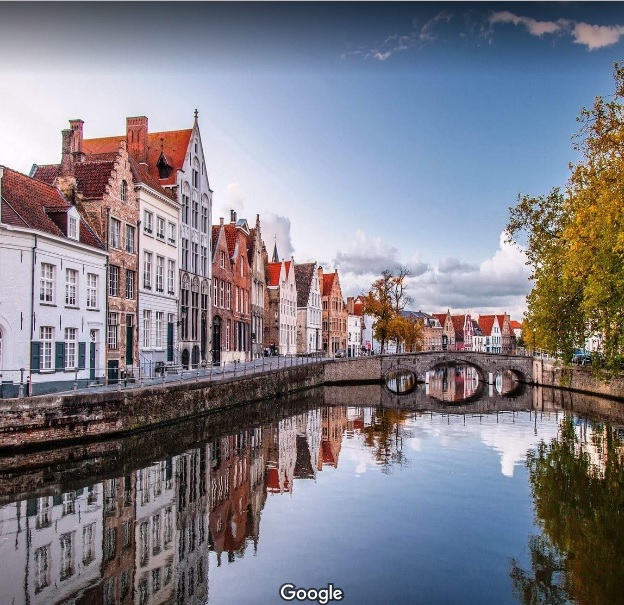
Bruges, Belgium: Image by Slavisa Grcic on Google Maps
Upon first contact in BCE 58 the local tribes accepted Rome’s outstretched hand. By BCE 56 they had realised its reality. The Coriosolitae, Veneti, Osismi and Namnetes, the Esuvii, Lexovii, Ambiliati and Diablintes, joined with the more distant Morini and Menappi in a massive uprising. These tribes held territories along the coast, they had powerful fleets… and trade links with Britain that were about to be broken.
Rome’s response was effective. While Caesar attacked the rebel coalition on land, a Roman fleet attacked by sea. The alliance fleet of 220 ships relied entirely upon their sails. Alas, during the decisive battle, the wind suddenly failed them.
Caesar claims to have executed the alliance’s councillors and to have sold the remaining rebels into slavery. But apart from the unlikely situation of a total clearance of the coastal strip from the Rhine around to the Loire, the archaeological evidence says otherwise.
149 words written for What Pegman Saw: Bruges, Belgium
A narrative taken from The Bretons (Patrick Galliou and Michael Jones, 1991, available on Amazon) supplemented by relevant articles on Wikipedia, and notes from Barry Cunliffe’s Facing The Ocean (2001) – plus notes acquired over the past two and a half decades of personal research.
The Morini and Menappi occupied what now is Belgium.