Cracked Colour

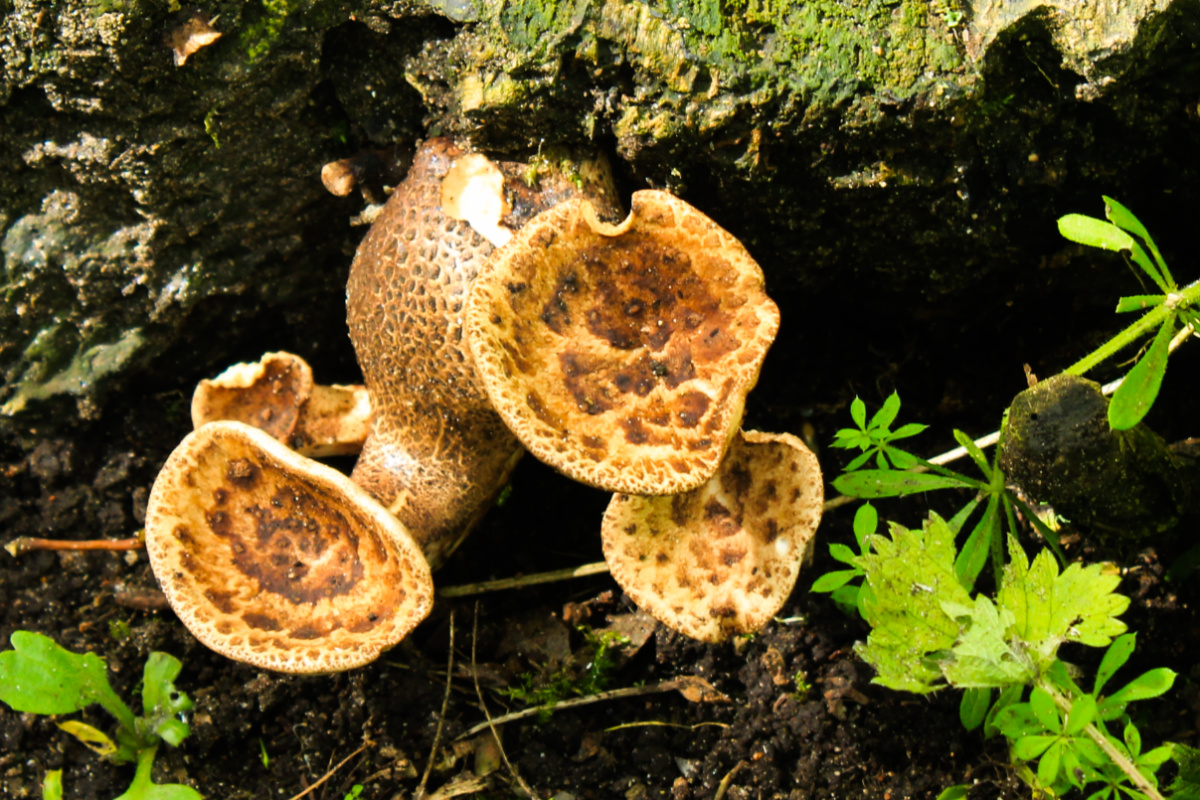
I make no excuse for posting another fungi photo. The contrasting colours of the clustered fungi and the flint-like flakes of the pine stump rushed at my eyes and grabbed me.

Cracked Colour

Fungi, pine and heather at Waveney Forest: Photo 8th October 2018

Waveney Forest rises above the extensive Haddiscoe-Fritton grazing marshes. Even so, an unexpected view of abandoned windmills (I can count three, plus the C20th replacement).

Mills on the Waveney

Abandoned mills on the Waveney; Photo 8th October 2018

Also unexpected was this inlet of silver birches, all lopped off, looking like upstanding pencils, with their inner red bark ghosting through.

Pencil-like Birches

Pencil-like birches: Photo 8th October 2018

And the unexpected star of the day …

Earth Stars

Earth Stars: Photo 8th October 2018

The first time I’d seen an earthstar.

Posted in Photos | Tagged , , , , , | 26 Comments

Into the Woods

No, not the Sondheim musical that cleverly combines plots from fairy tales by Brothers Grimm and Charles Perrault. And neither the book by John Yorke that explores ‘How Stories Work and Why We Tell Them’. Though I recommend both of those. No, I mean Tyrrels Wood.

Into The Woods

A wooden bridge in Tyrrels Wood; Photo 10 Sept 2018

#2018picoftheweek: Wooden

Tyrrels Wood, two miles south of Long Stratton (a tiny town that straddles the old Roman  road to London, now the A140) was first recorded in 1251. Today it belongs to the Woodland Trust and is open to all.

I visited the woods back in September. Too early for fungi, though I did find some. And too early for autumnal colours. If time permits I’ll visit again, perhaps in November.

Posted in Photos | Tagged , , | 6 Comments

Asaric Tales e-book update #11

Asaric Tales update11

Another month over. But am I another step nearer to e-publication? Yes. And no.

Asaric Axis (Asaric Tales Book Two)

At last I can say that all comments are in from the beta readers and critiquers. I have read them, considered them, and made a list headed To Amend. The main amendment … no, best call that a rewrite … concerns the Uissids’ dreams. Dreams are notoriously difficult to handle. And when you have nine characters in different combinations dreaming, that is a recipe for confusion. I’ve lost count of the number of rewrites to this section. What I offered my readers was my best attempt to date. Generally, they were able to understand the dreams and, with Kerrid’s help, understand their symbolism. But there were comments that the dream and exposition passages wore on (and on). And yes, I was aware of it but didn’t yet know how to change them. For that I must thank Lauren, my critique partner. She’s a brilliant ideas person. I looked at her idea, at how I could incorporate it; would it work? The result won’t be quite how she’d thought it, but I do thank her tons for it.

But the amendment and rewrite to Asaric Axis must wait at least another month.

Asaric Skies (Asaric Tales Book Three)

The revision of Asaric Skies is taking longer than anticipated. Too many distractions, I’ve been unable to devote much time to it. Still, I’m now about two-thirds the way through. My main concern here is to whittle away at the wordcount by the savage excision of unneeded material. Oh, my babies, I cry!

I hope to have the process complete in time for the next update. At which point I’ll again put out the call for beta-readers.

And while Book Three, Asaric Skies, goes through the beta-read process, I’ll return to Book Two, Asaric Axis, for what I hope will be the final amendments.

Meantime, I’d like to thank all those who have offered to read these books and to comment, and by those comments to support and encourage me. Their input is invaluable.

Posted in On Writing, The Spinner's Game | Tagged , , , , , | 8 Comments

Festive Colours

One of the #2018picoftheweek titles is Fall Colours. But do I display photos taken at the beginning of the season? Hawthorn and dogwood have been presenting their full colours since mid August. Or ought I to wait until late December to catch the last of the trees? Of course, if I’m not quick enough then it’ll be winter.

Or why not, I thought, ignore the trees and go for something … other? Something that, to me at least, shouts of the autumn?

autumn colors

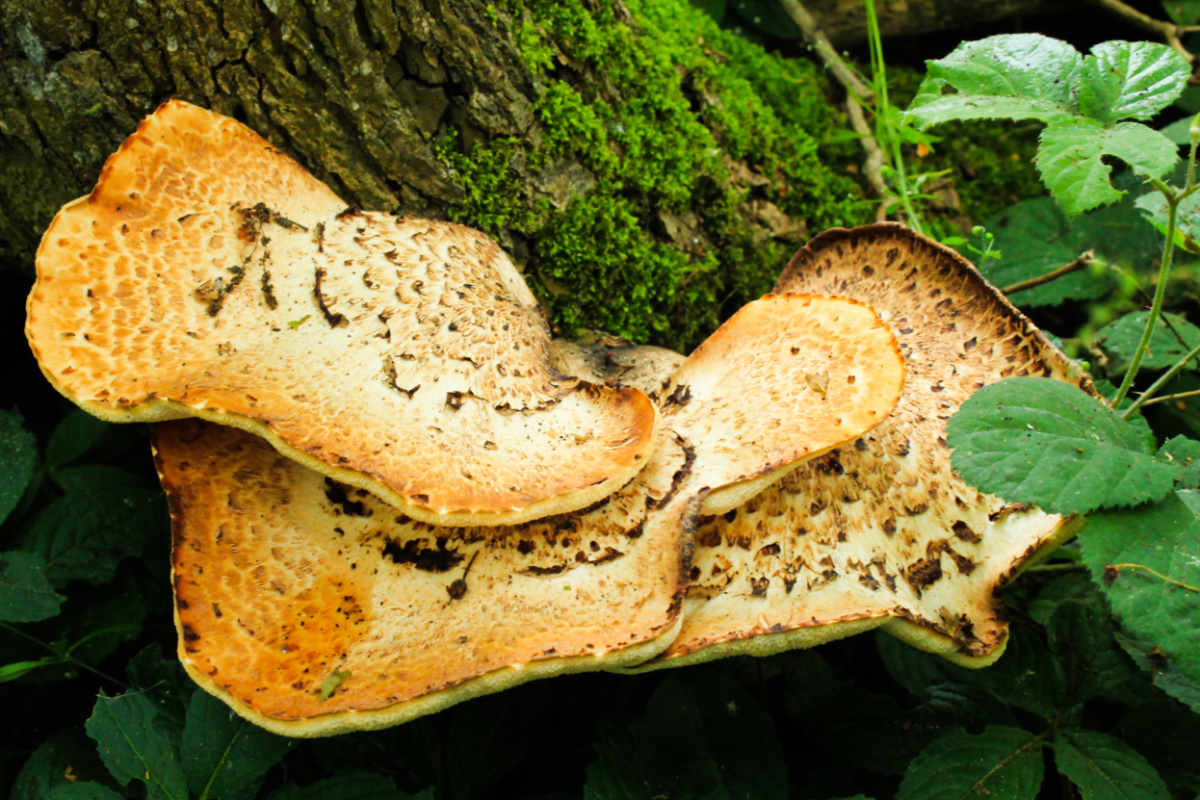
Beefsteak fungus, found in a woods in Swardeston, near Norwich: Photo 24th September 2018


Posted in Photos | Tagged , , | 8 Comments

A Call to Arms

Green Grille at Intwood

The green grille at Intwood All Saints church: Photo 24 Sept 2018

In Intwood churchyard there lies a grave, fancily enclosed with a wrought iron grille made shades of green by Nature’s hand. Moss obscures whatever inscription once was there yet leaves for us a useful clue. A coat of arms.

Coat of Arms Intwood

Coat of Arms at Intwood: Photo 24 Sept 2018

The Blazon

While it is customary to give the blazon in French, where I can I’ve translated to English, cos that’s what I speak:

Quarterly (the man deceased)

  1.  on silver, an engrailed cross in red
  2.  paly six of gold and blue
  3.  on blue, a silver chevron beneath 3 crosslets-patty of same
  4.  on silver, an engrailed cross in red

Impaled (his wife, an heiress)

  1. on blue, a silver chevron beneath 3 crosslets-patty of same
  2. on silver, a red fess-undy between 3 couped Boars’ heads of silver
  3. on silver, a black chief with 3 silver shells
  4. on gold, silver and blue fess-chequy beneath red chevron; and a double tressure flory of silver (red?)

Without getting too deep into explanations, what does this tell us?

Reading the Arms

The deceased’s arms—on silver, an engrailed cross in red—belongs to the Gurneys, a Quaker family, prominent as wool merchants and bankers in Norwich. The family, being highly fertile and prolific, had several branches. One branch lived at Earlham Hall, now part of the UEA, another branch lived at nearby Keswick Hall. I guess the deceased belonged to the latter.

The deceased’s arms are quartered with the arms of an heiress (his mother?)—paly six of gold and blue / on blue, a silver chevron beneath 3 crosslets-patty of same. The latter belongs to a family of ancient Scots ancestry, prominent Quakers of their time, with a name, today, synonymous with banking. The Barclays. The blue and gold stripes belong to a Warren family, but I haven’t been able to find them.

The son of a banking fraternity

At first glance it seems not so easy to name him since these two Quaker families have combined several times over the centuries. Yet the gentleman’s mother was a Barclay heiress. That narrows it down.

Around 1774, Richard Gurney married Agatha, daughter and heiress of David Barclay, of Youngsbury, Herts.

Their only son, Hudson Gurney, born in 1775, died without issue, aged 80 or so.

Both Richard and Hudson lived at Keswick Hall. At first sight it would seem either father or son, or even both, could be buried here. Except … the impaled wife’s arms.

The Impaled Wife

Hudson Gurney died without issue. But I suspect that wasn’t for want of trying. In 1809 he married … wait for it … Margaret, daughter of Robert Barclay of Ury, Kincardineshire. And who was Margaret’s mother? Sarah Allardice, daughter of James Allardice, and incidentally heiress of line to the Earls of Airth and Menteith.

All this is shown in the wife’s impaled arms

  1. on blue, a silver chevron beneath 3 crosslets-patty of same (Barclay)
  2. on silver, a red fess-undy between 3 couped Boars’ heads of silver (Allardice)
  3. on silver, a black chief with 3 silver shells (Graham, who married an Allardice)
  4. on gold, silver and blue fess-chequy beneath red chevron; and a double tressure flory of silver (Clan Stuart of Bute, not sure of the additional chevron; in C13th both the Grahams and the Barclays married into the Stewart/Stuart clan)

Hudson Gurney, the man whose bones are behind the green grille

Hudson Gurney died 9 Nov 1864. Unlike his family, he had little interest in banking and never became a Quaker ‘Friend’. As he wrote in 1813:

‘I was in early life determined to write a poem, to go abroad and to sit in Parliament.’

He achieved all three ambitions: a well-travelled versifier, an MP for Shaftesbury 1812, for Newtown, Hants 1816-32, and high sheriff of Norfolk, 1835.

I think I would have much liked Hudson had we met. As he said of himself:

I did nothing, but thought much.

Posted in History, Photos | Tagged , , , , , | 52 Comments

Mystery Lady

Who is she, this lady who presides over the south porch portal at All Saints church, Intwood?

Intwood Head

The Intwwod Head, All Saints church, Intwood: Photo 24 Sept 2018

The photo (#picoftheweek: Mystery) I took because … the light, the preservation, the lichen (there’s even a small cushion of moss on her head), and because she isn’t like the others I’ve seen on my travels around Norfolk. She wears neither gorget nor wimple, though close inspection does suggest a light fabric scarf wound round her neck. She wears a circlet over a fine fabric veil; it covers her hair, yet exposes her ears, and cascades down from her crown. There’s a faint suggestion of flowers attached to that circlet, metal flowers, possibly gold. A woman of substance, then.

The circlet together with lack of gorget or wimple dates her to the 1360s or soon after.

The lady’s head serves as the supporting corbel to an arch that frames the south porch door. That porch is reliably dated to 14th century. So now we have an end date for her too. 1400. But we’ll allow a few extra years: buildings aren’t always completed on time.

So, who was lord of Intwood manor between 1360 and 1400?

William of Buckenham, having acquired the manor shortly before 1349 (for a sum) ‘released it’ into the hands of Bartholomew Appleyard, citizen of Norwich, in 1356. It remained in the Appleyard family until the 1440s.

Can we now find a name for our mystery lady? This depends on whether she was wife to Bartholomew (died 1386), or to his son William (died 1419)?

Bartholomew’s wife was one Emma, probable daughter of Ralf Burwell or Bumpstead (both names are given), a fellow citizen of Norwich who alongside Bartholomew Appleyard served as bailiff. Their son married somewhat ‘higher’.

William Appleyard, MP, married Margaret, daughter of William Clere of Ormesby St Margaret. The Cleres had a sizable landholding in East Norfolk and were well connected.

Whose wife was she? I’d say William’s.

According to historyofparliamentonline.org:

[…] it was clearly the Appleyards’ wish to be accounted socially as one with the gentry of Norfolk …

And what better way for a wealthy merchant to raise his status than to grace the newly-built south tower of his manor’s church with the face of his ‘well-connected’ wife — decked in the latest fashions, of course.

By total coincidence, William Appleyard was made the first mayor of Norwich in 1404 and would have been involved in the design and erection of the Guildhall featured in last week’s #2018picoftheweek challenge, At the Heart of the City.

As to the husband’s head which would have co-graced that south porch: that has long since succumbed to the many waves of rural violence … political … religious … philosophical.


Posted in History, Photos | Tagged , , , , | 27 Comments

At the Heart of the City

Norwich, a Viking-Saxon foundation, has been a major trading centre at least since the reign of King Æthelstan (924-939).

Nch City2

The Guildhall, fronted by the permanent historic market: Photo 3rd May 2018

The marketplace we see today, with its former colourful canvas tilts now replaced in more durable materials, was moved to this site soon after 1066 to serve the newcomers from Normandy, Flanders, Brittany and France. Its predecessor had rooted itself in Tombland (the Empty Place) where the cathedral was soon to be built.

The Guildhall, England’s largest medieval civic building outside of London, was built in 1407, following the Charter that made Norwich self-governing in 1404. It remained the seat of city government until replaced by the City Hall in 1938. Even then it continued to serve as a courthouse, with holding cells, until the late 1970s. Behind it may be glimpsed a more modern trader: Tesco Metro.

#2018picoftheweek: City

Posted in Photos | Tagged , | 12 Comments

Nature’s Bounty, Bramble-Berries

Okay, so you probably know them as blackberries. But black-coloured berries proliferate in the Norfolk ‘wilds’ at this season, so let’s be specific. These are the berries of the bramble bush which offers its fruit (easy to reach for little fingers) for week upon week till the heavy frosts blight them.

Blackberries

A rambling bramble offers its berries: Photo 10 Sept 2018

Posted in Photos | Tagged , , | 8 Comments

The Garlanded Berries of Autumnal Black Bryony

Since a young child enchanted by the Flower Fairies books, Black Bryony has been one of my favourite wayside flowers. Or, more correctly, one of my favourite autumn berries. Pretty. But do not touch, for these berries are poisonous.

Black Bryony berries

Black Bryony berries hung all in a row, like Christmas trimmings, their wizened leaves so much resembling the seats of a ski-lift. Photo 10 Sept 2018

Not the photo I had earmarked for the #2018picoftheweek challenge title: Repetition, but nature wins out over manufactured features every time.

Posted in Photos | Tagged , | 13 Comments

Dawn Lights

There are many advantages of starting a walk in the early morning. The bird calls that later fade away. The freedom from traffic and its noise. Misty horizons, full of enchantment. And the sun on the morning dew.

dew sparkled web

The early morning dew sparkles on this spider’s web: Photo 3rd September 2018

#2018picoftheweek: Lights


Posted in Photos | Tagged , , , | 7 Comments