Asaric Tales e-book Update #5

Asaric Tales update 5End of the month, time for an update. And, oh, what a lot I’ve learned this month. Prime of which is that this project is going to take an aeon longer than first I’d thought. But, to work through this update from lesser to greater …

Take on Twitter

As I’d said (was that in the first update?) this year I wanted to take another step into social media, extend my ‘platform’. I chose Twitter, cos Twitter’s about words and I like to write. Also, I thought the restriction on tweet length would be good discipline for me.

Humph, what can I say? I am not impressed.

First to face me was who to follow. As a writer, I thought following my favourite authors would prove interesting. Wrong. My favourite authors, as with most tweeters, mostly retweet other folks’ tweets. How disappointing, nothing original—until they start the promotional phase of a new publication. Then, yes, it is worth noting how they do it.

So, I unfollowed those and looked elsewhere. I found a handful of interesting people. Oddly (or not) they all had a focus on history. And I’ve picked up some followers. Of those, straight off, were tweeters who had something they thought they could sell me. Yea, well, the same thing happens here on WP.  (I’m nothing if not cyncial of social media)

After the first couple of weeks, I became so busy elsewhere, I only tweeted my photos. But I keep the account open cos, sooner or later, I will have my own publications to promote.

Goodreads

The next ‘platform’ I joined was Goodreads. An essential for any would-be-published writer. I mean, where better to promote your book and profile than on a site devoted to readers. But since that’s still far into the future, I’m developing my skill at book reviews. Starting from no skill at all, I’ve progressed to ‘poor’. But, as they say, practice makes perfect.

My opinion of Goodreads? I found it difficult to find my way around the site. It’s not intuitive; more a matter of trial and error. A bit like threading a maze with many wrong turnings. But worth the learning.

Asaric Lies Beta Readers

The process is taking longer than I’d thought. To date, two readers have returned all five parts, one of whom (Joy Pixley, of Tales of Eneana) has undertaken the mammoth task of a full, in-depth, critique. I fall at her feet to offer up thanks. I expect another return of Part Five any day soon. Meanwhile, there’s only one readers still munching a way through Part One, though in fairness, she was late in joining the project.

And talking of critiques, I am now in my third week of membership at Criiters.

Critters

To quote from the site:

“The site began life as Critters, an on-line workshop/critique group for serious Science Fiction/Fantasy/Horror writers, then grew up into a set of workshops for every other kind of artistic endeavor.”

Basically, Critters provides a place for writers to find other writers of the same genre to critique their work.

But before you can submit your own writing for others to critique, first you must critique the submissions of others. It works on a credit system which requires you to critique on average one manuscript per week (these critiques must be returned within the week). According to Critters, most pieces get 15-20 critiques. Anything from a short poem to several chapters of a novel may be submitted, but no more than 20,000 words.

The administrative processes are automated. With the volume of submissions, it would be impossible otherwise for there are no fees, so no employees. In consequence, the rules of submission can seem rigid and endless. To me, certain aspects seemed old fashioned. But then, do we all have the latest issue software? No, we do not. And if you don’t conform to these rules? Mavericks are not allowed; your submission is automatically rejected. No offence, mate.

Critters also has a process to handle pieces in excess of the 20,000 wordcount, e.g. a full-length novel. The writer can submit this as a “Request for Dedicated Readers.” With this, the reader liaises directly with the writer. And when the critique is complete the reader receives a ‘generous credit’ (1 credit per 5000 words of ms). Obviously, with five of these monsters to be critiqued, this interests me.

To date, I have critiqued five pieces, but have only 4 credits because two of those pieces had wordcounts of less than 1500 and earned me only a half-credit each. Still, I am ahead of the criteria for submission and could, if I wanted, submit a sample chapter, or even the novel in its entirety. But for now, I hold back. I have yet to incorporate the results of the beta read, plus Joy’s horrific but much-needed critique. And I’ve promised myself not to touch Asaric Lies in this coming month of April. Why? Next segue …

Camp NaNoWriMo

I’m a Brit; camps are not really our thing. So when I was invited to join a ‘private cabin’ I resisted. But when it was rephrased as a virtual writers’ retreat …ha! That has more appeal. Ironically, in view of that opening line, our cabin hosts three English writers.

For those, like me till a month ago, who are unfamiliar with the NaNoWriMo concept, it is a public commitment to write x-number of words in the given time (a month). The Camp differs from NaNoWriMo (held in November) by allowing the writer to choose the terms: how many words, or lines, or pages, and it needn’t be new work, revisions are allowed. And so …

My commitment for the entire month of April is 100 hours of revision on Asaric Axis (Book 2 Asaric Tales). Which ought to stay my focus at a time when I’m tempted to start the next revision of Asaric Lies. It also allows me a month of deep thought regarding those much-needed amendments.

I am to share my virtual cabin with six fellow bloggers, so I get to met new friends, too:

Tales of Eneana 
Sammi Cox
Word Shamble
A Dalectable Life 
Invisible World
Flights of Fancy

Asaric Lies, Plans for May

Hopefully, all beta readers’ returns will be in. Then I have to face the next stage of revision. For I know there are tweaks and major overhauls needed before Asaric Lies is ready for the next stage of preparation.

And the next stage? To submit it to Critters for another critique. Will the process never end? And in moments of doubt, I repeat my mantra: I can do this. I can do this. I can.

As I said, the main thing I’ve learned this month is that this project is going to take two ages longer than I’d first thought.

Next update? Next month.


Posted in On Writing, The Spinner's Game | Tagged , , , , , , | 7 Comments

Negative Space

Norfolk is famous for its flint-built churches, and for the flush-work that spreads patterns across the church walls. Here it adds interest to the porch of Blickling parish church.

Porch of Blickling Church

Porch of Blickling parish church showing stone and flint flush-work: Photo 24th March 2018

The ornamentation of this church predates the Boleyn family residence at Blickling; we can look to the wool merchants for its funding. Blickling lies adjacent to Aylsham, the one-time capital of the wool industry in Norfolk.

#2018picoftheweek : Negative Space

Posted in History, Photos | Tagged , , | 2 Comments

Beyond Imagining

Web Vision CPAround her, a myriad of glowing orbs blink into being. Thousands. Millions. Unimaginable numbers. A sphere for every living being: every bird, every person, all beasts, all fish, every individual tortoise, every scorpion and blood-sucking leech, all bats, all beetles, all lice and trees, all herbs, all grasses, every individual plant. The life-light of every living being here connected according to contact and association, and each formed to a web. The grasses to deer, the deer to the hunters, the hunters to wives, the wives to the herbs and the berries they gather, the herbs and the berries to the clans for sharing. Unimaginable, the numbers of webs within webs within this Otherworld Web. But familiar, for many times she has entered there.

Above her aches Sky Man’s domain. Through its glittering ceiling, she glimpses a higher dimension, that of the divines. She sees them—she swears that she does—traversing the night sky, sees them as colours ever changing, sees them as untrammelled light. Intense, as fierce as the sun. Soft as the whisper of wind-stirred grasses. Strident as the high glare of summer. Delicate as rippling waters. She has no names for these colours; colours she never has seen beyond this Web.

And the sound of them! Songs without voices—beyond the lark, beyond the spring-warbler, beyond the night-triller: carolling choruses exalting their being. Beyond sweet, beyond melodic.

‘The truth of them?’ she said to the brothers whose hide-and-bone dome she shared. ‘Beyond our imagining: ethereal colours, joyous singing.’


An excerpt from Asaric Axis (Book 2 Asaric Tales) prompted by Weekend Writing Prompt #48 (See Sammi Cox)


Posted in On Writing, The Spinner's Game | Tagged , , | 12 Comments

By Blickling

The weather being fair on Saturday, I hauled on the walking shoes and hopped on a bus, then on another bus. The intention was a circular walk, from Aylsham—the one-time centre of the Norfolk wool industry, now a quiet market town—and back, via Silvergate. Blickling and Ingworth. Six miles. Ish.

The Boleyn’s of Blickling

Blickling Hall, home of Henry VIII’s second wife, Anne Boleyn, provided the highlight of the walk.

Blickling Hall

Blickling Hall: Photo 24th March 2018

Sir Geffrey Boleyn, Lord Mayor of the City of London, bought the Blickling estate ca.1450 from Sir John Fastolf (or his heirs) and made it his country seat. This didn’t represent much of a move, for Sir Geffrey Boleyn was a scion of the Bullens of Salle, just 5 miles from Blickling, as the crow flies, where the family had held land at least since 1283.

Ann Boleyn

Anne Boleyn, courtesy of Wikipeadia

Anne Boleyn, gt.granddaughter of Sir Geffrey, was the daughter of Sir Thomas Boleyn, first & last Earl of Wiltshire, and Elizabeth Howard (daughter of Duke of Norfolk). Born at Blickling, she married King Henry VIII January 1533 and gave birth to Elizabeth (Queen Elizabeth I) in September 1533. In May 1536, Anne was beheaded on a charge of treason.


Blickling Hall Facts and Factoids

Anne Boleyn was born at Blickling Hall. Technically true. The hall as it stands today was built—though renovated seems more likely—more than a century after Anne’s birth, in the 1620s.

Dated Door at Blickling Hall

The dated door at Blickling Hall: Photo 24th March 2018

To explain:
Anne Boleyn’s grandfather, Sir William Boleyn, was the father of one Alice Boleyn, who married Sir John Clere, a wealthy landowner at Ormesby, near Great Yarmouth.

And it came to pass (for lack of male heirs) that in 1556 Sir Edward Clere, High Sheriff of Norfolk, a descendant of said Alice Boleyn and Sir John, inherited Blickling and made it his residence.

Meanwhile, the Hobart family from Essex was busy extending its property portfolio, first into Suffolk, then to Norfolk where they settled at Plumstead, near Norwich. There, Sir James begot Myles who begot Thomas (d.1560) who begot Henry Hobart (d.1625). In 1603 James I knighted both Henry Hobart and his son John. Henry became MP for Norwich.

In his History of Norfolk, Francis Blomefield (who doesn’t always get it right), says James Hobart bought Blickling off Sir Edward Clere. This seems highly improbable due to the wide-apart date;  he goes on to say that John Hobart, son of James built the present hall upon his father’s death in 1625. You don’t need a calculator to know that can’t be right.

The corrected version reads: Henry Hobart bought Blickling Hall off Sir Edward Clere, which his son, Sir John Hobart, then renovated in 1620s.

Dutch influence at Blickling Hall

Dutch influence on this row of cottages at Blickling Hall: Photo 24th March 2018

What we see today is a Jacobean hall, heavily influenced by the Netherlanders who at the time were flooding into Norfolk as religious refugees. They brought with a tradition of building in brick; superior techniques in weaving (a much-needed shot in the arm for the Norfolk wool industry) as well as hatters and glovers; improved methods of agriculture; and market gardening;

Bull at Blickling

The Bullen’s bull is everywhere!

Bull at Blickling

Sir John Hobart paid homage to his Boleyn (Bullen) antecessor. Blickling


Posted in History, Photos | Tagged , | 21 Comments

A Patterned Platform

Once upon a time, a train line ran from Norwich, westward through many a Norfolk village. Laid in 1882 by the Midland and Great North-Western Railway, M&GNW was better known to the locals as the Muddle and Go Nowhere Line.

Bricks at Costessey Station

Bricks (baked ca.1880) form a pleasing Pattern on the former southern platform at the Hellesdon & Costessey Station . . . next stop, Norwich-Heigham; Photo 6th March 2018

My entry, as Pattern, for this week’s #2018picoftheweek Challenge

The line was active until 1985. These days, joined with the disused Great Eastern Railway from Aylsham to Cawston, it is better known as Marriotts Way: 26 miles of traffic-free track from Norwich, looping around Reepham and on to Aylsham, popular with walkers and cyclists … and me.

Marriotts Way at New Costessey

Marriotts Way at New Costessey as it passed the one-time station between Costessy and Norwich-Heigham;: Photo 6th March 2018

The platform is newly revealed. I knew it was there, but until the clearance, it was just hints of bricks.

Posted in History, Photos | Tagged , , | 17 Comments

It’s Spring

I’m not sure whether to enter this as ‘It’s Spring’, or ‘Close-Up’: my offering for this week’s #2018picoftheweek Challenge.

Pussy Willow

Pussy Willow: Photo 13th March 2018

There are several species of willow in the Uk with the alias of Pussy Willow, but only two grow in East Anglia: the Goat Willow, and the Grey Willow, both aka Sallow. So which is this?

The Goat Willow grows to be a small tree. The Grey Willow remains ever a bush. Since the photo is a close-up of the long-shot below, I’d say it qualifies for tree status.

Underpass at Whitlingham

The underpass on the Norwich Southern Bypass at Whitlingham. Photo 13th March 2018

See #2018picoftheweek for list of categories and further details

Posted in Photos | Tagged , , , | 1 Comment

Alder Red

A difficult shot when the March winds do blow. But I was determined to capture the alder in all its parts.

Alder catkins and cones

Alder in flower with last year’s fruit: Photo 13 March 2108

Despite the wind-blur, I think we can see last year’s ‘fruit’, looking remarkably like pine cones, hiding behind this season’s flowering catkins—the showy gold-through-red-purple catkins are male, the female are the less conspicuous clusters of green. The tree has yet to open its leaves.

The alder, a native of Britain and Europe,  was an important tree in the days before chemical dyes. From the flowers come ‘fairy’ green (for Robin Hood’s garb); from its bark, ‘alder red’; from its twigs, brown; and from its early spring shoots, golden cinnamon. So it’s not surprising that the alder features often in the Asaric Tales, posted here over the past few years.

But the alder has many more uses than the yield of dye. Its wood being proof against its natural wet environments, it makes excellent timber for building in damp places. Early bridges would have used alder. And alder was used for many of the pilings in Venice. Historically it was the wood of choice for boats, and more recently, for lock-gates.

It’s also a healer. A decoction of its bark soothes burns and inflammation, while a bed of alder leaves will bring relief from rheumatism. Plus those leaves are a pest deterrent, ridding a house of fleas. All round, a useful tree.

The alder colonised Europe from its Ice Age retreat along the south shores of the Caspian Sea (today’s Northern Iran; also the original home of our much loved apple).


Posted in History, Photos | Tagged , , | 2 Comments

Asaric Tales e-book Update #4

Asaric Tales update 4Beta Readers: The elasticity of time

My usual complaint is of the increasing contraction of time—not enough hours in the day, days in the week, weeks in a month; it all goes so quick. Blink, and that’s another year gone. But not this week. This week feels more like a month.

Why?

Because last weekend I put out a call for beta readers. And sent out the first of the five parts, along with the questions, to this first batch of volunteers, and two days later received the first completed questionnaire. Said reader is now working on Part Two.

As to the others … of all the advice, in books, on the Internet, on YouTube, on Goodreads, no one warns of the elasticity of time while waiting the feedback. The advice is to give the reader two weeks, then gently nudge.

I tell you, this is worse than waiting for exam results, or the results of a DNA test. And while I’ll persistently plod towards a distant goal, I’ve also a clamouring, agitating impatient streak.

Asaric Tales Beta Readers: Still taking on volunteers

I’m told there’s no such thing as too many beta readers. So, if you’re thinking you might like to try it, but have left it too late, don’t fret. Though there must come a time when I close the list, it will remain open for some time yet. And if you are too late for Asaric Lies (Book 1 Asaric Tales), there are another four books.

Asaric Tales Beta Reader: What does it involve?

While not all writers have the same requirements, I ask my beta readers for feedback—in as many or as few words as suits you—on plot, characters, clarity and pacing by way of a questionnaire. Simple, hey?

And I don’t ask that you read the entire book in one session. The book has a 5-act structure; you’ll work on one act (part) at a time. The smallest is 16k words, the largest 21k.

It does help if your usual genre is fantasy; it’s a bonus if you write it, even if unpublished. But it’s not essential. For everyone, there must be that first time they read Fantasy Fiction.

The one thing I DON’T ask of you is to act the line editor, copy-editor, or any other editor.

Interested? Read the descriptive blurb below. Still interested? Fill in the form on Contact Me and wait for me to get back to you.

Asaric Lies, Book 2 Asaric Tales (95k): Descriptive Blurb

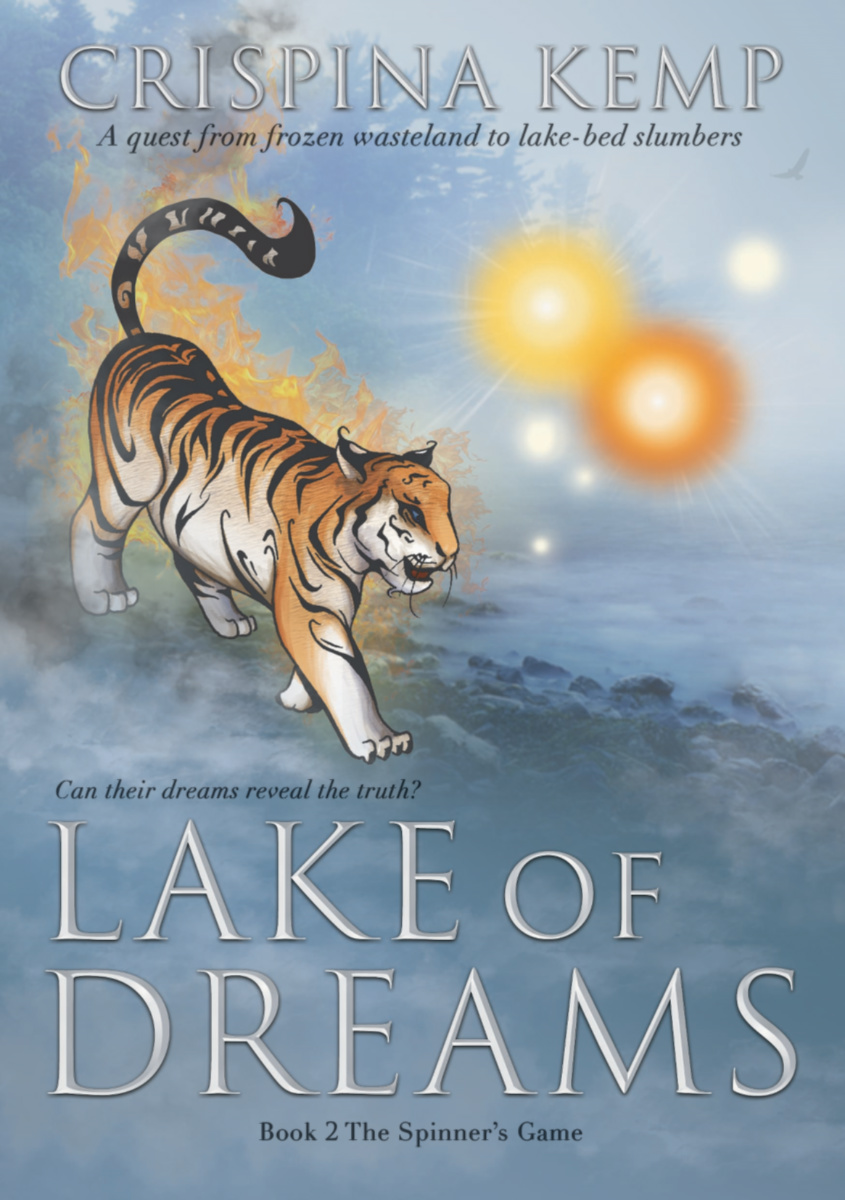
Born of a fisher-hunter clan, fraudulent seer Kerrid holds two false beliefs. That in her supernatural abilities she is unique, and as Voice of the Lady she’s exempt from Plaited Woman’s fate. The arrival of nine boats from the east shatters both these beliefs. Forced to make an unwise judgement there follows a trail of death. Questions plague her: Why does she dream of babies burning? Why does a voice in her head—Suffer the loss, suffer the pain—taunt her of some dire deed? What has she done? And what is she that no matter how lethal the wound, she does not die?

In Asaric Lies (Book 1 Asaric Tales), Kerrid explores and develops her supernatural powers, gains a glimmering of what she might be, discovers the source of the accusatory voice in her head, and sheds her fraudulent status to become a fully trained wise-woman, able to enter the all-encompassing otherworld Web. But this is only the first step on her journey.

Set in the between-time when Ice Age gave way to warmer days, when nomadic hunter-fisher turned to settled agriculture, when spirits and demons morphed to gods, Asaric Tales crosses continents and weaves through ages fraught with floods and droughts to become the prototype of our most ancient myths.

Asaric Axis: Book 2 Asaric Tales

What will I do while I wait on your feedback?

I’ve made a start on the rewrite of Asaric Axis (Book 2 Asaric Tales). In the original Feast Fables, this formed the last act of Book 1 and the first act of Book 2. Now I need to stitch them together. Some feat of restructuring! This is one reason I changed from the usual 3-act structure to less common, yet older, 5-act. I’ll keep you informed of progress.

Asaric Tales: A matter of titles

Asaric Tales has a long history.

You might believe it began with the blogged book, Feast Fables. No, it began long before that.

It began in 2007 as a prequel to The Hare and the Adder, a fantasy novel which in 2006 was in the hands of an interested agent while I was in hospital fighting a brain virus.  (The time-slip fantasy sci-fi, Priory Project, posted on crimsonprose, incorporates part of The Hare and the Adder.)

Since I intended it as backstory, not only of Kerrid but also the other Asars who appear in The Hare and the Adder, I gave it the working title of In the Beginning. At that stage it was a single book, wordcount of c.150k. And I was desperately trying to reduce it, ‘cause seldom does a publisher accept a book of such size from an unknown writer. To that end I paid for a critique by a sci-fi/fantasy writer.

Said writer was at that time working on animated version of a Kurdish folktale. A short while later I read an article in a writing magazine in which he made the point that certain terms, phrases, or even isolated words, could key our thoughts to various cultures. Though a wizard shortcut if that’s your intent, it could also carry the wrong cultural connotations.

In the beginning, and when the Voice of the Lady gave judgement, she said, An eye for an eye … The title alone was enough to plant Biblical associations in the reader’s head, without the judgement as well.

From that oops moment, arose the new title, Feast Fables, which now has become Asaric Tales, enabling me to extend the series, tracking through to the most recent, Can of Worms.

Asaric Tales: The complete set … so far

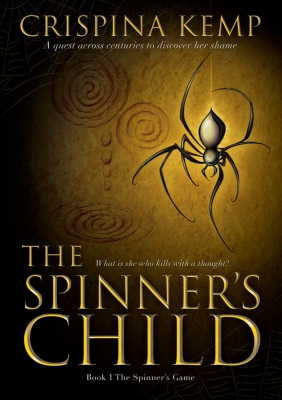
Book 1: Asaric Lies
Book 2: Asaric Axis
Book 3: Asaric Ties
Book 4: Asaric Sons
Book 5: Asaric Sins

You might note a certain pattern here. All ‘Asaric’, all with 4-letter words, all ending in -s-.

To find five titles wasn’t easy. I read and reread the synopsis of each. I studied the revised 5-act structure. That was the most telling thing, like a club whacked over my head. Yet even knowing the themes, I still had to come up with the titles. But now I have them, I’m confident they’ll keep me on track throughout the rewrites required.

As I said at the start of this post, though I have an impatient streak, I will persistently plod towards a distant goal.

Posted in On Writing, The Spinner's Game | Tagged , , , , | 23 Comments

Water. Everywhere

After the snow came the flood. Okay, so I exaggerate; it wasn’t that bad. Yet walking the Wensum Valley on Tuesday all I could see of the lower meadows were the protruding hedges and the tufts of the taller grass-hummocks.

So, what was I to take photos of?

Costessey Mill 1

The sluice at Costessey Mill: Photo 6th March 2018 (#2018pichoftheweek ‘Motion’)

I lived in Costessey till 1983. This sluice didn’t exist way back in the day. I guess they built it to stop kids diving in off the bridge, which had become an accident black-spot. That sluice certainly pretties-up the water. I claim this as ‘Motion’ in #2018picoftheweek.

R. Wensum at Costessey Mill

River Wensum at Costessey Mill, looking over the meadows towards Drayton. Photo 6th March 2018

The mill has long since ceased to be active. Yet there’s been a mill here since forever. Two are recorded in Domesday Book.

R. Wensum at Costessey Mill 2

River Wensum taken from the bridge at Costessey Mill, looking towards Hellesdon. Photo 6th March 2018

Here began my interest in medieval history. Before the English lost to the Normans (1066), Costessey and its mills belonged to the earls of Norfolk & Suffolk, i.e. Earl Harold (Godwineson), and later his brother Earl Gyrth. After the conquest the extensive manor of Costessey landed in Breton hands, to become, post-1075, part of the Honour of Richmond held by Alan Rufus. Briefly in the C12th it landed in the hands of Alain de Rohan, (I just love that name) who granted the tithes of St Edmund’s church to the monastery of Bon Repos in Brittany.

Posted in History, Photos | Tagged , , , , , | 14 Comments

After the Snow

Yesterday I was finally able to take the camera for a walk. And I found this, lost in the midst if several acres of snow-melt.

After the Snow

Snowdrops caught in the snow-thaw: Photo 6th March 2018

It was a day of firsts. The first clear shot I’ve had of a Little Egret. These used to be summer visitors to Breydon Water. Over recent years they have taken to breeding in East Anglia and have gradually worked their way up the rivers till now they’re more common inland than in the estuaries. But they’re skittish, and my zoom isn’t very powerful. So stretching the limits . . .

Little Egret

Little Egret, a kind of oriental-looking bird, so I’ve given the photo a kind of oriental treatment; Photo 6th March 2018, west of Norwich

Posted in Photos | Tagged , | 8 Comments