A Wheel of Time

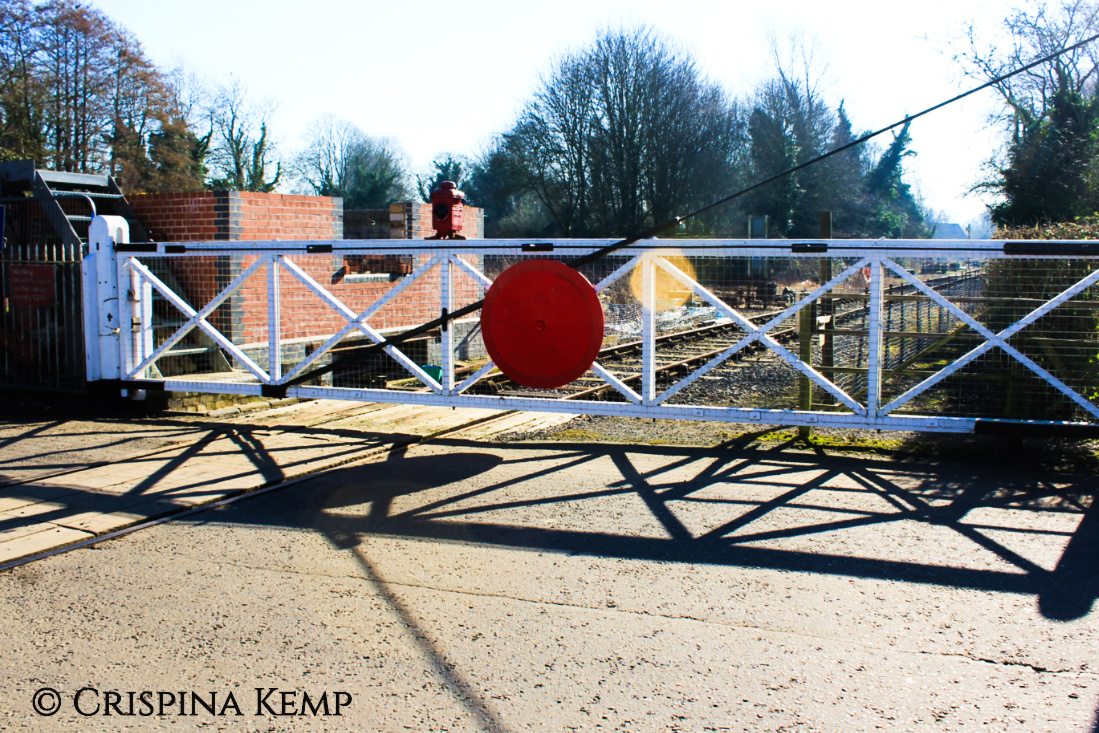
Days were we fetched our water from a well. Days were the women met at tha village pump. But the wheel turns and leaves us only memories. And relics such as these.

Sparham village well and pump

Sparham village well. Or is it a pump? Photo taken 5th July 2018

When first I saw it, I thought by the wheel that this had been the old village well. But I notice there’s also a spout, more suggestive of a village pump. Yet I’ve never seen a pump with such a ‘handle’.


Posted in History, Photos | Tagged , , | 7 Comments

Ode To A Gnat

gnats for fun


O you assailant of non-Euclidean flight!
Why must you always wait for night?
Why won’t you attack when the sun is bright?
O vampiric smidgeon of the night.


First posted in 2015: reposted in aftermath of massive gnat attack.

Posted in Poems (Some Silly) | Tagged , | 2 Comments

The Colours of Summer

So here we are, post-Solstice, and no matter what the weather might do, it’s summer. I know it is, cos every beach-front store has a bright display of beach toys.

Beach Toys

Beach Toys on sale in Southwold: Photo 26 June 2018

#2018picoftheweek challenge: Summertime

Posted in Photos | Tagged , | 14 Comments

Sea, Sand and Shelters (must be England)

Last week I took my camera for a walk around Southwold, a former fishing town in Suffolk, a one-time Georgian resort, all elegance, Jane Austin and … stuff. So many photos, which to share?

Beach Huts at Southwold

Beach Huts at Southwold: 26th June 2018


Posted in Photos | Tagged , | 22 Comments

Asaric Tales e-book update #8

July already, and what have I to report?

Asaric Tales update 8

Asaric Lies, Book One

Asaric Lies has been beta-read, critiqued, amended, critiqued again, and beta-read and … I am now waiting for the last three critiques to be in, before I consider the results and make my final amendments. My thanks to those who have offered their services and have delivered, and to those who are still in the process. Words cannot express how much I appreciate your time and your efforts. I kiss your feet! You are gold!

Update on Critters.org.

My submission of the three new chapters and request for a dedicated reader for Asaric Lies to Critters fell on the same day as Critters closed membership to EU residents because of the complications with the new data protection acts. (see Update #7)  I thought Asaric Lies wouldn’t now be listed. I was wrong.

I have received five critiques. But with the first received it seemed Critters wouldn’t credit their work. However, since then I’ve received word that they have received credits even though I’m no longer a member. Alas, the situation doesn’t extend to the dedicated read. I’ve had two offers for that and have had to refuse them.

LadiesWhoCritique

Blocked from membership of Critters.org, I looked for an alternative source of critiques and beta-readers. And found LadiesWhoCritique, a bulletin-board type site with provision to advertise for critique partners and beta readers and, despite its name, open to men as well. I joined up, advertised, and now have a mutally agreeable partnership with another ‘lady who critiques’. However, for the past two weeks that site has been offline for maintenance. Drats, just as I want to advertise again.

Asaric Axis (Book Two) Call for Beta Readers 

Yep! Book Two is ready to enter that never-ending process of beta readers and critiques. And so, the blurb …

Kerrid is an Asar, one of a handful of people with unusual traits and abilities. In Book One, Asaric Lies, the all-encompassing oracular Spinner charged Kerrid with the eradication of Neka, the demon-snake that has stalked Kerrid since she was a child. To do so, Kerrid believes she must discover the truth of the Asars.

Thus, when “big brother” Olun summons Kerrid’s husband to a family meeting with the expressed purpose to discover this truth Kerrid jumps at the chance.

Kerrid’s success in this stage of her quest depends upon her gaining the approval of Olun, who never has liked her, and that of his brothers. This would be easier without her husband’s repeated efforts to undermine her, in part motivated by his jealousy of the second-born brother, Jiar.

If the above blurb teases your interest and you’d like to volunteer to read the book then please use the form here to contact me.

Asaric Axis currently weighs in at 73,000 words ( lightweight compared with the first book).

Asaric Skies, Book Three

And while you helpful, much-appreciated, more-precious-than-gold beta-readers tackle Book Two, I will be busy on Book Three, Asaric Skies. I am hoping (ha ha) to reduce its wordcount by some 25,000 words. I also need to ensure changes made in Books One and Two are carried into this next book. Then there’s the copy-editing, and getting rid of the ‘-ing’ words (the fast-track diet); a general knock into shape, ready to pass through the same procedures. I sigh. Only another two books after that, then I can get down the mechanics of e-book publishing.

July. Hmm. Yet I am making progress. Slowly.

Posted in On Writing, The Spinner's Game | Tagged , , , , , , | 4 Comments

Southwold, 10:30 GMT 52° North

26th June, at 10:30 am (GMT), at 52.3° North, the sun peeped from behind the tower of St Edmund’s church at Southwold—just as I took this photo (and effectively bleached out the sky!).

West face St Edmunds Southwold

West face of St Edmund’s church, Southwold, Suffolk: Photo taken 26th June 2018

#2018picoftheweek: Sun Flare

St Edmund is one of East Anglia’s own saints. King at the time of the Great Heathen Army, in 869 he was slain, reputedly, by Ivar the Boneless and his brother Ubba. Thirty years later he became the first venerated saint of the newly converted Christain Vikings of East Anglia with a cult centre at Beadoriceworth (now Bury St Edmunds). His is one of the most common dedications amongst East Anglian churches.


Posted in Photos | Tagged , , | 12 Comments

Ring around … with Roses

hamelin by falco

design by CP on original photo by falco

Ringed around with roses
With tissues wiping noses
Plague has brought the sneezes
Bubonic, black, with wheezes

Eastern rats we hold to blame
Held in ships awash with shame
Fleas that carried, heat restricted
Came with cold, released, inflicted
Swelling bubos in axial joins
Painful armpits, painful groins
Sweating, coughing, life depleting
Into town and country eating
Numbers rising, mass graves seen
They didn’t know of quarantine


Sammi’s Weekend Writing Prompt #61: Quarantine in 67 words.

Posted in Poems (Some Silly) | Tagged , | 16 Comments

Coke and Honey

Long years ago, when I was at school, as part of our history curriculum we covered the British Agricultural Revolution. Living in Norfolk the focus, of course, was on the change from the open three-field system (which required one field to be fallow each year) to the revolutionary “Norfolk four-course system” (see below).

Bee and Nectar Mix

The “Bee and Nectar Mix” at High Ash Farm, Caister St Edmunds: Photo 21 June 2018

Coke of Norfolk

Coke of Norfolk (aka Coke of Holkham, aka Thomas Coke, 1st Earl of Leicester 1754-1842), was cited as the originator of this revolutionary agricultural system, able to provide food for the growing masses.

1st Earl Of Leicester

Coke of Holkham: downloaded from Wikipedia, and remastered by CP

In later years I discovered this wasn’t true. Though, true, he did much to improve his 30,000-acre estate at Holkham, in North Norfolk. To quote from Wikipedia

Coke has been described as “the real hero of Norfolk agriculture”, despite the fact that his land was so poor one critic is said to have remarked that “the thin sandy soil must be ploughed by rabbits yoked to a pocket knife”.

While Coke did much to promote the new system to his fellow politicians and landed classes, his interest was primarily stockbreeding.

A lamb at Venta Icenorum

A black-faced lamb, probably not of Coke’s breeding, but rather cute grazing at Venta Icenorum (Roman town at Caister St Edmunds): Photo 21t June 2018

The four-year crop cycle:

  • Year 1, wheat
  • Year 2, turnips
  • Year 3, barley with clover and ryegrass under-sown
  • Year 4, clover and grass grazed or cut for fodder

Developed in Norfolk (England) during the 17th century. I would argue an even earlier date.

Turnip Townshend

Today, the introduction of this revolutionary system of agriculture, crucial in its ability to feed the growing populations in the growing towns and cities, has been shunted onto the shoulders of Turnip Townshend, scion of the Norfolk Townshends of Raynham (aka Charles Townshend, 2nd Viscount Townshend 1674-1738; eldest son of Sir Horatio Townshend, 3rd Baronet & Viscount; and brother-in-law to prime minister Robert Walpole).

Turnip Townshend

Turnip Townshend: from Wikipedia

Charles Townshend was keen on turnips; he saw them as excellent fodder for his livestock.

But while the inclusion of turnips might represent an innovation, it wasn’t the turnips alone that allowed the fallow-field to fall out of use. Let me explain.

All Fodder to Me (or Organic Farming, aka Soil Fertility)

The use of turnips as winter fodder for the livestock had a double effect. With turnips as fodder more stock could be overwintered, which in turned produced more manure. Good for field fertility. Side effect of this was the “night-soil” man no longer called with his cart to collect the human “deposits” from towns and cities. (which might have had some bearing on the subsequent outbreaks of cholera).

But it was the inclusion of clover and rye-grass in the rotation that was the real innovation, and delivered a double whammy for soil fertility.

Hay field, overlooking Tas Valley

Recently cut hay field, overlooking Tas Valley, and Venta Icenorum: Photo 21 June 2018

Firstly, in grazing the fields the sheep provided fertiliser in situ.

Secondly, the clover, being a legume, converted the nitrogen found as a gas in the soil to a form those under-sown grasses could use. In addition, it further fertilised the soil ready for a bumper crop of cereals in the next year.

This was organic farming at its best.

vetch

Vetch growing in the “Bee and Nectar” MIx at High Ash Farm: Photo 21 June 2018

And who was responsible for the introduction of the clover and rye-grass?

Mostly the smaller tenant-farmers.

Calvinists and their Honeyed Gifts

And mostly in Townshend’s and Coke’s North Norfolk neighbourhood, those tenant farmers would have been recent immigrants from the Netherlands, fleeing religious persecution (aka Calvinists). They began to arrive in mid-1500s and continued in trickles and swarms during the next two centuries. Not only did they bring new strains of clover, they also introduced many of our now traditional market garden vegetables.

Which brings me to the honey …

A Pollen and Nectar Mix

These photos were taken on the walks around High Ash Farm (Caister St Edmunds, a few miles south of Norwich) where broad grassy walks invite the rambler in, and over 100 acres are devoted to the provision of a “Pollen and Nectar Mix” to attract endangered bees, moths and butterflies.

Sainfoin

Sainfoin growing at High Ash Farm: Photo 21 June 2018

In just a small patch of field I was able to count at least six different species of legume (trefoils, medicks, clovers, vetches and sainfoin) not to mention bedstraw and oxeye daisies. I expected the farm to have an apiary. Maybe it has, but it advertises itself as horse stables.

Bee and Nectar Mix

“Bee and Nectar Mix” field at High Ash Farm: Photo 21 June 2018

Now I look at this vista, and imagine how our countryside looked in the days before chemical fertilisation.

Posted in History, Photos | Tagged , , , , , , | 35 Comments

Mallow … best served fresh

For my fellow writers at Camp NaNoWriMo (April) . . .

Common Mallow

The Common Mallow, one of my all-time favourite wildflowers: Photo 21 June 2018.

The Common Mallow, one of my all-time favourite wildflowers: I haven’t tried it toasted. Though this isn’t the ‘Marsh’ mallow, which is now quite a rare plant.

Mallow close up

Common Mallow close up: Photo 21 June 2018

Taken on a windy day, I think those white dots that spray out from its stamens could be a dusting of pollen, captured in action.

Posted in Photos | Tagged , , | 2 Comments

In Post

Every autumn the sycamore keys spin down from the trees, each to cast their unique divination. I’m keen to see what becomes of this post-rooted seedling.

Sycamore in post

Sycamore seedling in post: photo 30th May 2018

Will it devour its host in years to come? Or will it fail to flourish due to an unforeseen lack of essential nutrients?

#2018picoftheweek: Something Grows

Posted in Photos | Tagged , , , , , | 19 Comments