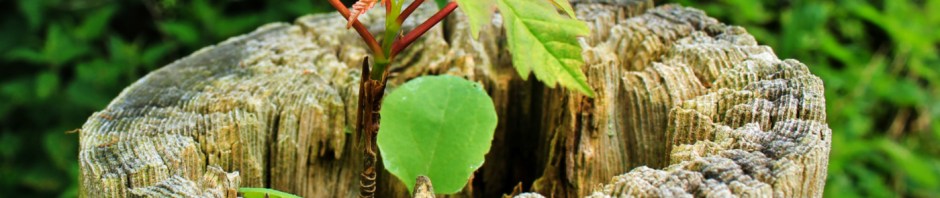
Every autumn the sycamore keys spin down from the trees, each to cast their unique divination. I’m keen to see what becomes of this post-rooted seedling.

Sycamore seedling in post: photo 30th May 2018
Will it devour its host in years to come? Or will it fail to flourish due to an unforeseen lack of essential nutrients?
#2018picoftheweek: Something Grows

 crispina kemp
Same thing happens with the bloody maple tree “helicopters”… they plant themselves EVERY where. If one does not see them, for a few years, one can no longer simply uproot them bare-handed…
This is so very lovely, though.
LikeLiked by 1 person
Well, usually I get uppity about the sycamore seedlings cos they’re subject to blight, they cast black-black shade and they’re not native! But this one looked kinda cool. Now I shall have to return every year to see how it’s doing. But the post in question is along one of my favourite walks. so I don’t mind.
LikeLiked by 1 person
I feel your pain!
And it is more than kinda cool.
LikeLiked by 1 person
I am reminded of a report by Francis Blomefield in his History of Norfolk (ca.1750) of an oak tree upon which an elder and a rose had taken root, each becoming a full-grown specimen. No idea if it still exists. Apart from being somewhere in Norfolk, I don’t remember where it was.
LikeLike
How cool is nature?
LikeLiked by 1 person
Unfortunately, Caston is way across county from me, and isn’t easily reached by public transport, so no chance to check if it’s still there. Unlikely, though.
LikeLike
Dang…
LikeLiked by 1 person
I found the Blomefield reference:
A tree grows on Caston common in a very unusual manner; a large willow on the head or tod of which lodged an acorn, the key of an ash, an elder-berry and a hasle-nut (hazel). All took root in the rotten part on the tod and now grown and split open the willow’s body, those roots which ran from tod to earth have become a tree. Outward the rind is willow, yet 5 sorts of trees are there conjoined: an oak, an ash, a willow, an hasle (hazel), and an elder
LikeLiked by 2 people
Wow!
LikeLiked by 1 person
I vote for flourishing ! Great photo
LikeLiked by 1 person
Thank you. The post sits beside a fairly busy rural road, though it’s set well back. It stands a good chance of survival, considering the ‘field’ beyond the fence is an untouched wilderness. No herbicides used, and not grazed by horse nor cow.
LikeLike
I love this photo! Yes, something is growing, indeed… My suspicion is that it won’t survive. But who knows?
LikeLiked by 1 person
It stands a good chance of survival, not subject to horse or cow grazing, not subject to herbicides. I shall have to keep my eye out for it when I return to the area in autumn when the local hills turn wondrous colours.
LikeLiked by 1 person
Would love to see what becomes of it!
LikeLiked by 1 person
I visit the site at least once a year, so have patience, and I’ll keep you informed.
LikeLiked by 1 person
Lovely photo! Although now I feel inordinately caught up in the fate of this brave little seedling. How tall is the post, and how rotten? It seems to me that the seedling’s long-term chance for survival relies on it being able to get its roots all the way down to actual soil and stabilize itself. If the post isn’t rotten enough, the roots might not be able to get down, and it would be hemmed in, like a potted plant. If the post is too rotten, the weight of the growing seedling might knock it over before it gains solid traction. I look forward to your updates, although I’m already looking pretty far into the future.
LikeLiked by 1 person
The post is about waist height. Not easy to assess cos it stands on a bit of a bank. To one side is a tarmacked path, takes mostly dog-walkers, then a road. While the post is part of a fence to a meadow on the far outskirts of the village, during the ‘school run’ that road can be busy. Also, it takes a certain amount of through-traffic from the villages beyond. So traffic pollution could be a problem, though the fence stands a good five foot from the road. The meadow beyond … well, I haven’t seen anything grazing there for a mighty long count of time. I’d say now it’s home to deer, swans and ducks, all of which stay away from the road, preferring the lush and dense willows and alders that grow furthest from the road.
The post is quite close to the first of the three St Walstan’s wells. Only the third is recognised these days, being in the grounds of a church with a shrine to St Walstan, a local saint, the focus of pilgrimage until the late 1950s. But the well is marked on old maps, and I distinctly remember my foot finding it when I was trespassing as a kid … I used to live locally.
How rotten is the post? Put it this way, as I said, I used to live locally, and although I’ve long moved away, I have returned almost yearly. And never have I seen the posts and the fence renewed. So I’d say the post is pretty damn rotten. But also, tends to be baked in the sun, there being no shade.
Well, that’s my annual pilgrimage taken care of. Go see the plant.
LikeLiked by 2 people
Good points, that there are so many other hazards for this little sapling to worry about.
It sounds like such a lovely walk — thank you for sharing your photos so that I can enjoy it vicariously!
LikeLiked by 1 person
Always a pleasure. I like to share.
LikeLiked by 1 person